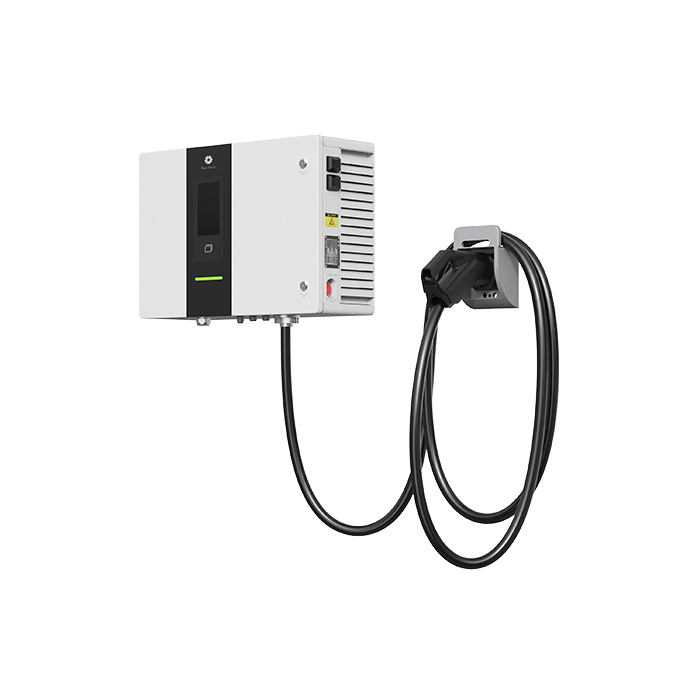
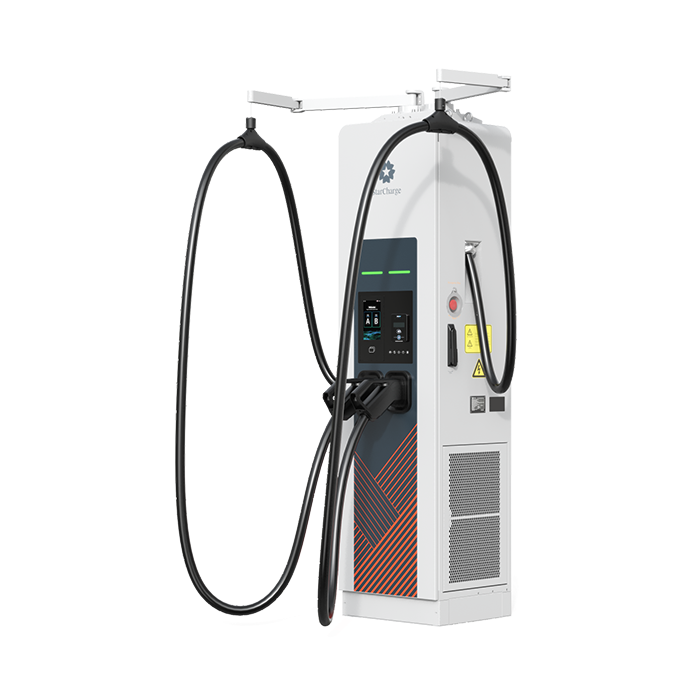
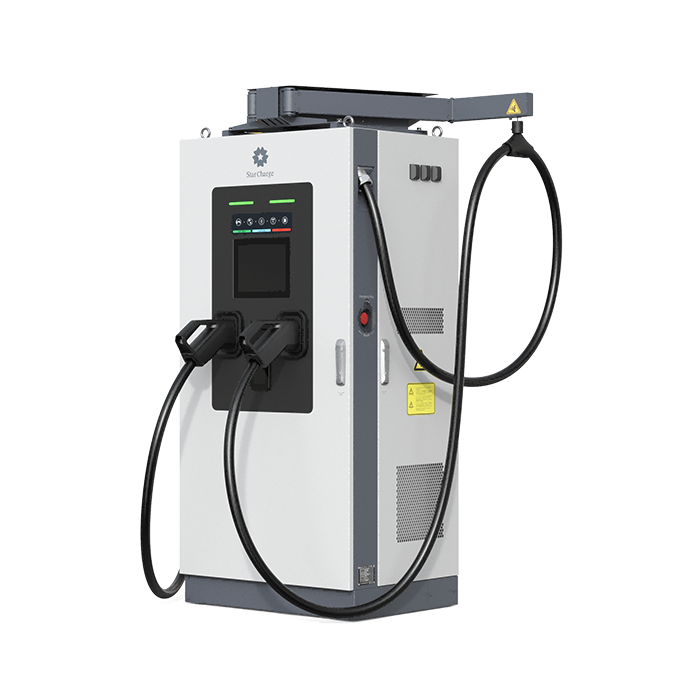
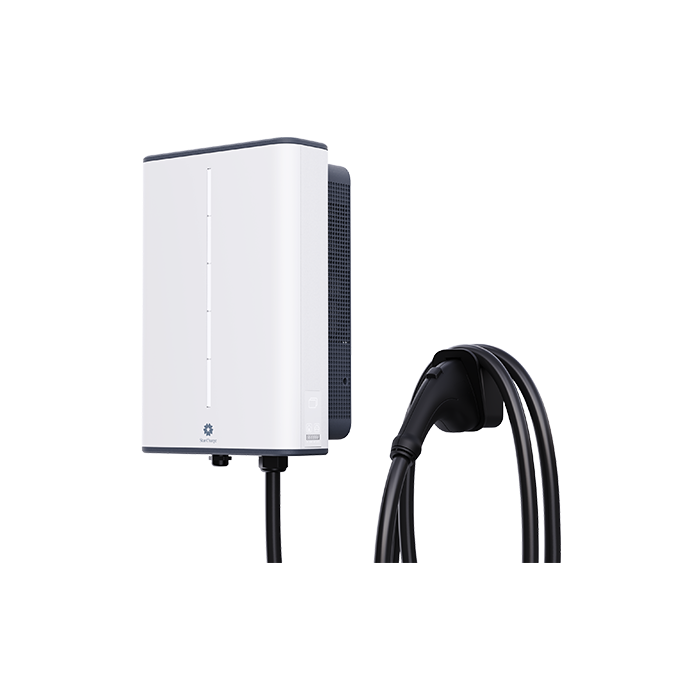
On the morning of August 4, the 2nd China EV Charging Infrastructure Technology Innovation Conference opened in Changzhou. Hosted by the Electric Transportation and Energy Storage Branch of the China Electricity Council (CEC) and the Energy Industry Electric Vehicle Charging Infrastructure Standardization Committee, and organized by StarCharge, the conference was held under the theme of 'Green and Low-Carbon, Safe and Efficient, Innovation-Led,' focusing on industry pain points in the charging infrastructure field, keeping an eye on technological transformation, interpreting cutting-edge trends in charging and battery swapping, and jointly exploring innovative industry development.
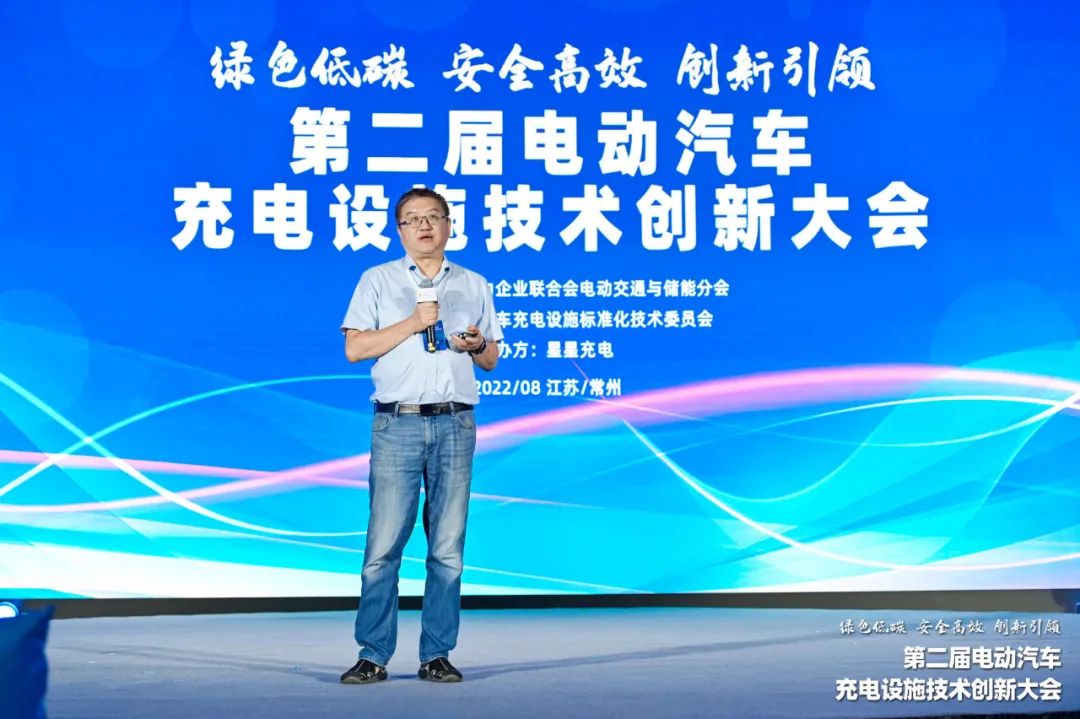
Ni Feng, Deputy Director of the Experimental Verification Center of the State Grid Electric Power Research Institute, delivered a speech titled 'Review and Progress of China's EV Conductive Charging Interface Standards.' The full transcript follows:
I am very happy to have the opportunity to attend this conference today. Here I have met many old friends and new friends, and most importantly, many online acquaintances. Many of our experts have collaborated in work over these years, but due to the pandemic we could not discuss face to face—it was all online discussion. Today the CEC and StarCharge have created this opportunity for us to gather together, so I would like to take this occasion to express my gratitude!
The theme of my speech today is related to ChaoJi, but more than that, I would like to introduce the drafting status of several national standards for EV charging infrastructure, of which ChaoJi is a very important part. First, a brief overview of the standards system. The most fundamental standard for charging infrastructure currently being drafted under the lead of the energy industry's EV charging infrastructure committee is 18487.1. It defines the entire charging interface system, from the system architecture and basic requirements, including pilot guidance and control timing, to systematic definitions. Another is GBT 27930, the communication protocol, which defines communication between vehicle and pile. And another is 20234.4, the standard for the ChaoJi connection interface developed over several years. These three standards are the main focus of my introduction to you today.
Let me review the history of the development of these national standards. China's electric vehicles actually got quite an early start, but never formed scale; it was really after 2008 that vehicles gradually began to reach a certain volume. At that time there were no standards at all. State Grid developed some enterprise standards, used on a small scale, which were not rolled out on a large scale. As the state paid greater attention, it was decided that a national standard must definitely be issued. Because there were very few international reference solutions available early on—just the AC and DC approaches—the standard drew on Japan's DC solution and Europe's AC solution, with China making some modifications on the basis of these two. In fact, understanding of the technology was still at a very shallow stage when the standards were formulated; many things were unknown. At the time, it was entirely a matter of sketching a framework first as industrialization took off, and many problems appeared in the standards. These two standards were mainly drafted by the 20234 series, led by China Automotive Technology and Research Center. In addition, 27930 was drafted under the lead of China Southern Power Grid, but for various reasons it contained many defects and problems, including some very serious safety issues—for example, the DC charging lock-in problem at the time. Because the work was initially treated like making industrial products, not much consideration was given to safety and other aspects. The 2015 edition, once released, was of great significance, but technically speaking it was still a very imperfect standard.
The 2011 edition was produced mainly by one or two people at one or two organizations, without sufficient discussion—there was indeed no atmosphere for it at the time. Later, starting in 2015, the standard was revised step by step. When revising the standard at that time, a requirement was set: we had to be compatible with the 2011 edition and patch up some of its functions, and the standard was developed under the guidance of this philosophy. After doing this, we actually discovered later that if you do not make fundamental changes, you cannot solve some basic problems. As a result, although the 2015 edition marked great progress after its release, some rather serious problems still remained.
One more issue: starting in 2016, the industry needed new coordination so that charging infrastructure could develop steadily for decades to come. Beyond the problems I just mentioned, there was another very big problem—it was not designed with the next step in mind, which led to countless problems when we did upgrades. From this, we proposed whether we should make a new solution. Let me briefly review this.
When we took on the revision of the standard that began last year, we first set several principles. The first was to maintain the stability of the industry—no very large changes would be made to the old 2015 edition, as such changes would cause incompatibility with existing systems. Because the 2015 edition had problems in its compatibility design, it would be very difficult to achieve a seamless connection between the new system and the old system without making some fundamental changes. The second was to adopt a completely new design, building a firewall into the new system so that it can develop better over the next 10 or 20 years. Those were the principles of the revision at the time.
This standard has received enormous attention from the industry, and enthusiasm has been very high. By our preliminary statistics, more than 150 experts from over 70 organizations have directly participated in the discussions of the standard. The entire revision process for the new standard is actually quite rare in Chinese standardization, because, as everyone knows, most other standards are completed within a few departments; under normal circumstances, a few organizations take the lead, hold several regular meetings, and a preliminary standard can basically be completed. But this time we adopted a very different approach: we welcomed all companies—not only domestic Chinese companies, but companies from every industry, including automotive, batteries, charging infrastructure, and so on, as well as foreign companies. The way we handled the entire standard was also rather different from before. As I just mentioned, we completely abandoned the traditional approach; now, for each standard, we held a meeting every week—160 meetings in total over more than a year. Everyone solicited opinions openly through the internet, not only within China; the English version also solicited comments from around the world.
During the comment solicitation process, there were differing opinions from every industry. As you can imagine, the workload was enormous, and several teams of colleagues worked overtime to handle it. Everyone discussed the key comments, and special task groups were also set up to analyze and discuss each issue and find better solutions. Our goal is to formulate standards that are excellent and can truly be implemented—not ones that, once taken up, lack specific requirements and are unclear. We believe such things would do great harm to the future of the industry, so we strive to the greatest extent to put the standards into practice and verify them.
In addition, during the compilation of this standard we also made some new attempts. We found that developing the standard itself is very important work, but there is an even more important task: changing how we integrate standards with the industry, so that industry needs and standards are closely bound together. Here we tried an open-source approach: while the standard was being drafted, engineers published the relevant code openly online, each company worked on its assigned module, feedback based on actual conditions was quickly returned, and then written into the standard, which was revised through a spiral iteration approach.
Next, let me briefly describe what these several standards have accomplished. 18487.1 was the earliest standard; it was not revised in the 2011 version, and it was taken up for revision again in 2015. At that time the revision was made with reference to 61851-1, including a systematic study of it and participation in their discussions, which I believe gave us a deeper understanding of the standard. On that basis, and now incorporating the majority of domestic requirements, the entire standard has been reorganized. In terms of length, it is more than double the original, and a great deal of the description of the overall architecture has been redefined.
The 27930 communication protocol also completely abandoned the original approach based on industrial control and on the grid — designed from the electricity perspective and around equipment — which did not consider future development: once complex operating models became involved, how to solve information exchange was not merely a simple matter of communication, control information, or data collection; there were also other commercial issues. The designed framework completely separated the physical layer, the transport layer, and the application layer above them. What is the benefit of this? The standard allows the application to be as unrelated as possible to the hardware platform below it, without being forcibly bound together. This laid an excellent foundation and gives the standard stronger vitality.
Another standard is 20234.4, which defines the architecture of the ChaoJi connector — how to achieve high power, along with requirements made for low power — all described in great detail in this standard. When developing this standard we conducted a large number of experiments. At the same time, relying on the ongoing ChaoJi international cooperation project, we worked with experts from Japan, Germany, and the Netherlands to continuously improve and design the scheme. We fed the results of these discussions and experiments back to iterate the standard, forming its complete design, including the test methods and the final pass criteria, all specified in detail. Although I personally believe it is still not perfect and much needs improvement, compared with previous standards — you can look at our earlier connector standards — this standard explains the basic concepts and, to the best of our ability, has been made as detailed as possible. It is now open for comment, and I hope the experts here will offer their valuable opinions.
Let me recall the current progress of these several standards. As I mentioned earlier, this standard has completed two rounds of soliciting comments, and more than 90% of the issues have been dealt with. We are now holding discussions on the final key points; this month it should be ready for submission for review, and then depending on arrangements, it will be submitted now or in a few months. The 20234.4 standard was only approved as a project at the end of last year, so its progress is a bit slower; we hope that in the fourth quarter of this year it can reach the condition for submission for review, so that all these standards can be successfully completed this year.
Finally, a brief summary. On standardization, let me share some personal thoughts. I believe a standard system requires, first of all, a very safe, rigorous, and executable standard. The various methods I just mentioned require the most fundamental elements of the standard to be strictly defined together, including the interpretation of terminology, which is actually very important — confusion on this point leads things further and further astray and digs many pits. Second, we need a good iterative approach to promotion, because without it — given how fast our industry is changing — if we follow the old national-standard model where a standard is revised only once every 3 to 5 years after release, many functions cannot keep up. Throughout the process of promulgating standards, technical committees should be established to evaluate new requirements, similar to our open-source project approach, collecting summaries of past problems and reflecting them back into the standard to form an executable standard. Finally, and extremely importantly, we need a mandatory, authoritative, and traceable standard certification and assurance system. This point is vital: with only a good standard and a good promotion method, but no good referee and no strict measures to guarantee the implementation of the standard, everything returns to zero. Many projects fail not because the standard has problems — you may even be using a very complete standard — but because the referees have problems during implementation, or the entire assurance system is flawed, causing bad money to drive out good. Only when these three points are executed more completely can standards better serve the industry.
That concludes my presentation today. Thank you all!