




Data Center Microgrid
Data centers require continuous, high-quality power to support servers, cooling systems, network equipment and other critical loads. Rapid growth in computing demand can also increase peak power consumption, electricity costs and pressure on existing grid capacity.
A data center microgrid integrates the utility grid, energy storage, renewable generation, backup generators, UPS systems and intelligent energy management. It coordinates energy supply with computing and cooling demand while maintaining the required backup reserve, helping improve power resilience, control energy costs and support the use of renewable energy.
Advantages of the Plan
-
Resilient Power Supply
Coordinates multiple power sources and prioritizes critical loads to strengthen power resilience and reduce the risk of service interruption.
-
Computing-Energy Coordination
Aligns energy supply, storage operation and eligible computing or cooling loads to improve the coordination between computing demand and available power.
-
Lower Energy Costs
Uses peak shaving, load shifting and demand management to reduce peak demand and optimize electricity consumption without compromising backup requirements.
-
Greater Renewable Energy Integration
Stores surplus renewable energy and supplies it when needed, increasing clean energy utilization and supporting data center sustainability goals.
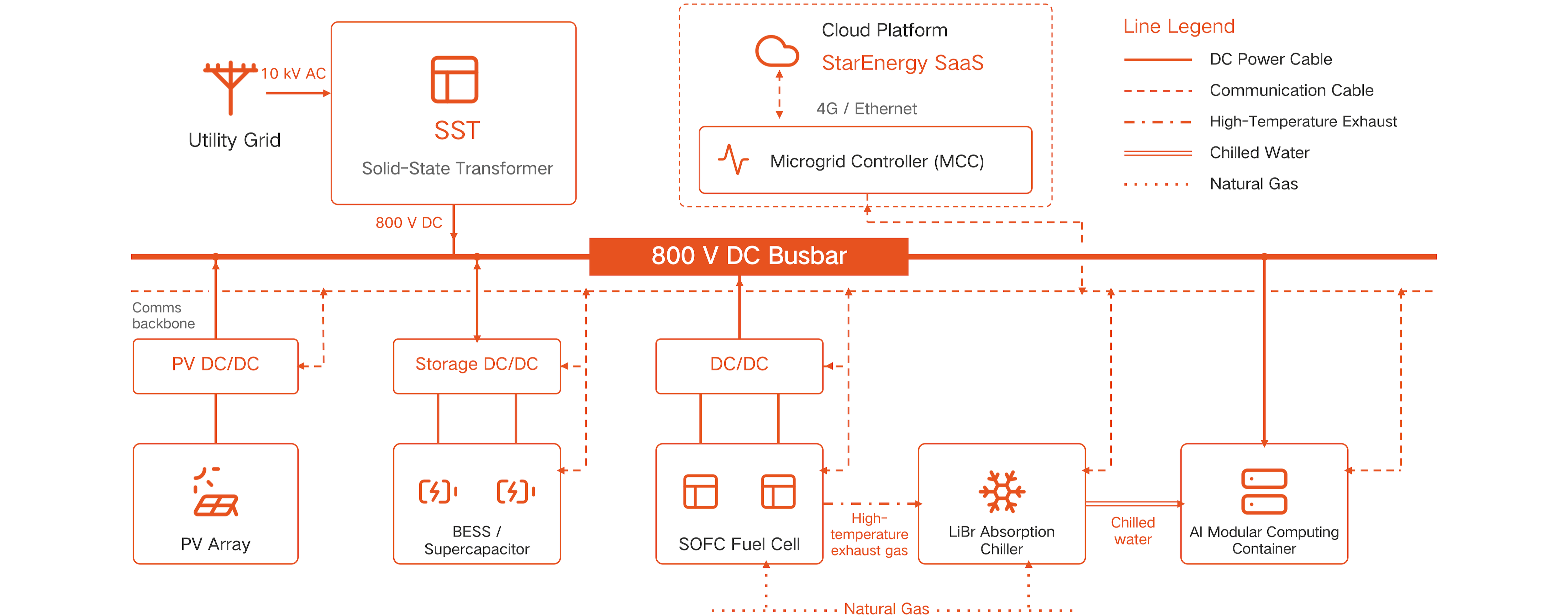
Electrical Diagram
Related Products

FAQ
-
Is there a downtime risk with the DC bus system?

