





Industrial Park Microgrid
Industrial parks typically have diverse and highly variable energy demands from production equipment, office buildings, warehouses, charging facilities and other loads. They may also face high peak electricity costs, limited transformer capacity and insufficient utilization of distributed renewable energy.
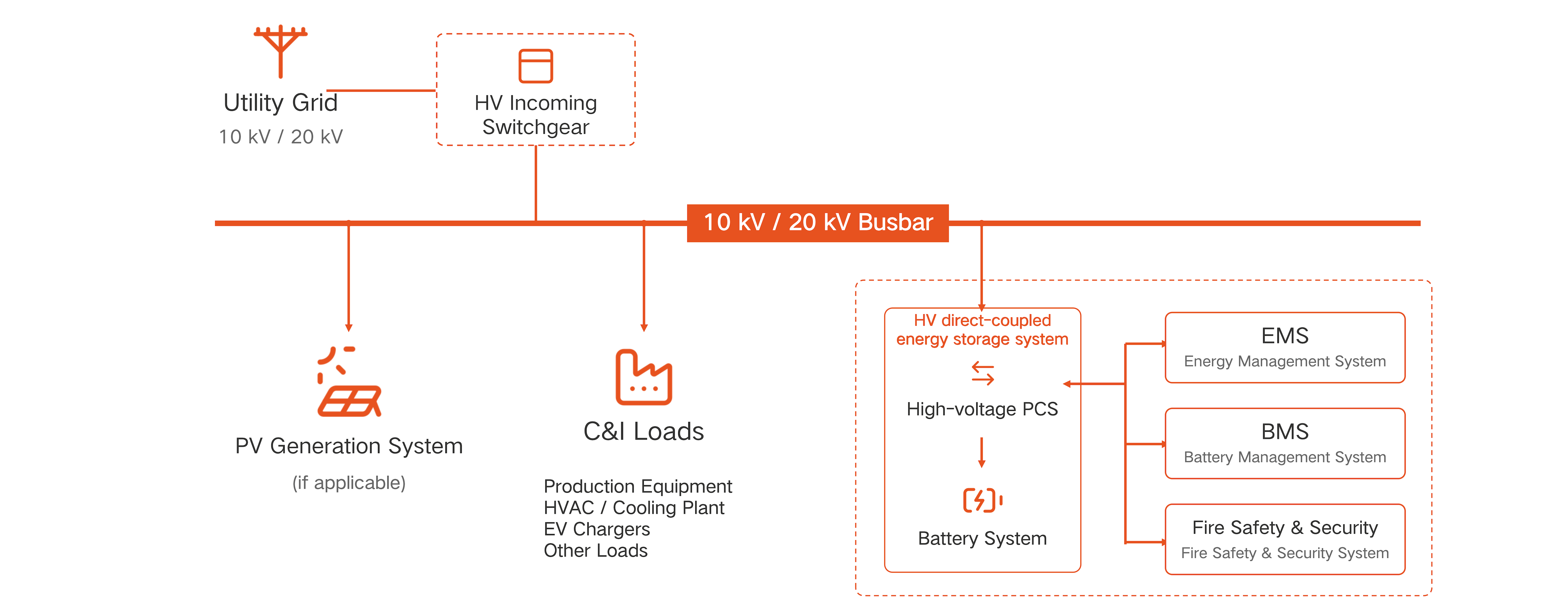
An industrial park microgrid integrates the utility grid, photovoltaic generation, energy storage, charging equipment, backup power and controllable loads through intelligent energy management. By coordinating energy production, storage and consumption, the solution helps reduce electricity costs, improve renewable energy utilization, enhance power supply resilience and support the park’s future energy needs.
Advantages of the Plan
-
Lower Energy Costs
Uses peak shaving, load shifting and demand management to reduce peak electricity consumption and control overall energy costs.
-
Flexible Capacity Expansion
Energy storage supplies additional power during peak demand, helping accommodate new production loads and charging facilities without relying solely on transformer expansion.
-
Greater Renewable Energy Utilization
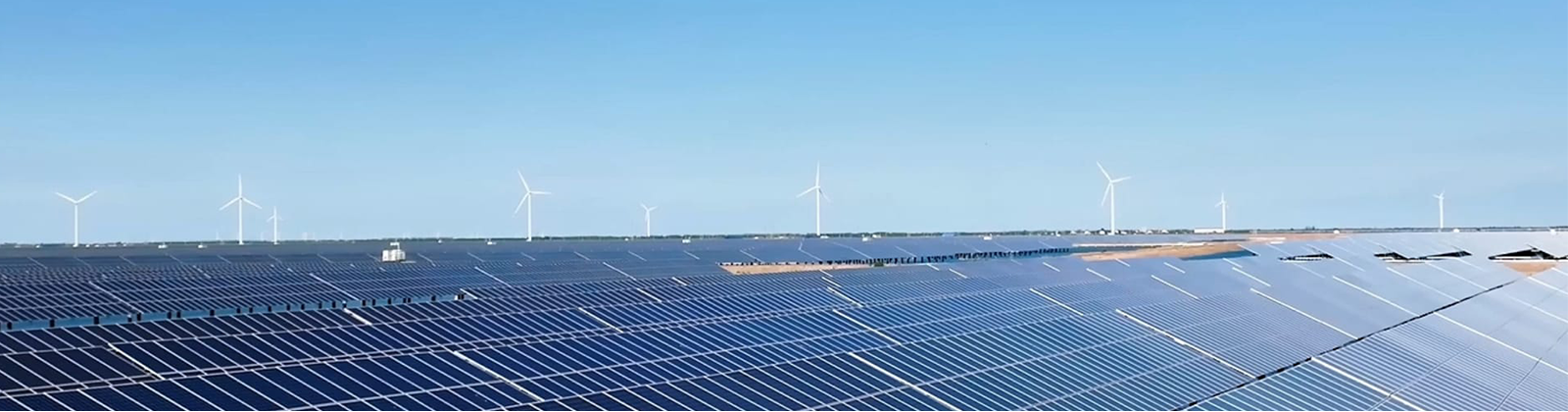
Stores surplus photovoltaic generation and releases it when needed, increasing on-site renewable energy consumption and reducing curtailment.
-
Intelligent Multi-Energy Coordination
Coordinates generation, storage, charging and controllable loads through unified energy management to improve operational efficiency and power supply reliability.
Electrical Diagram
Related Products

FAQ
-
What is cross-domain energy scheduling?

