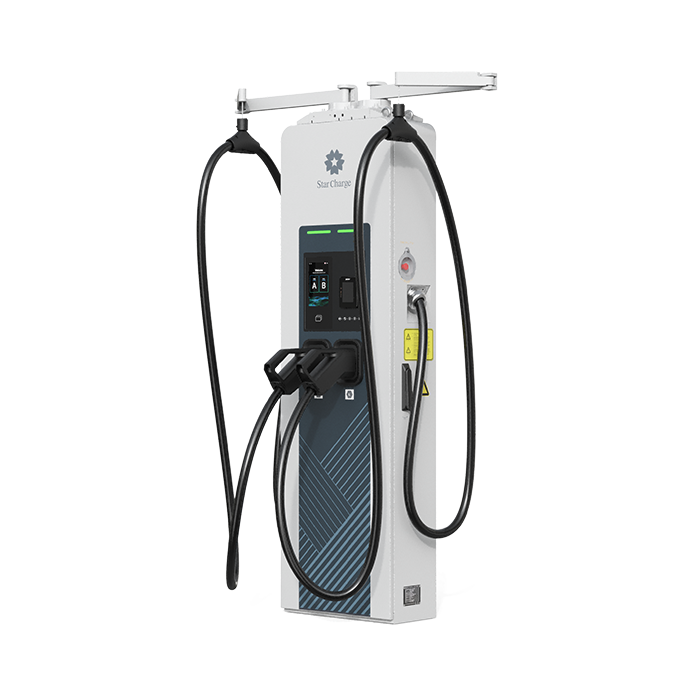
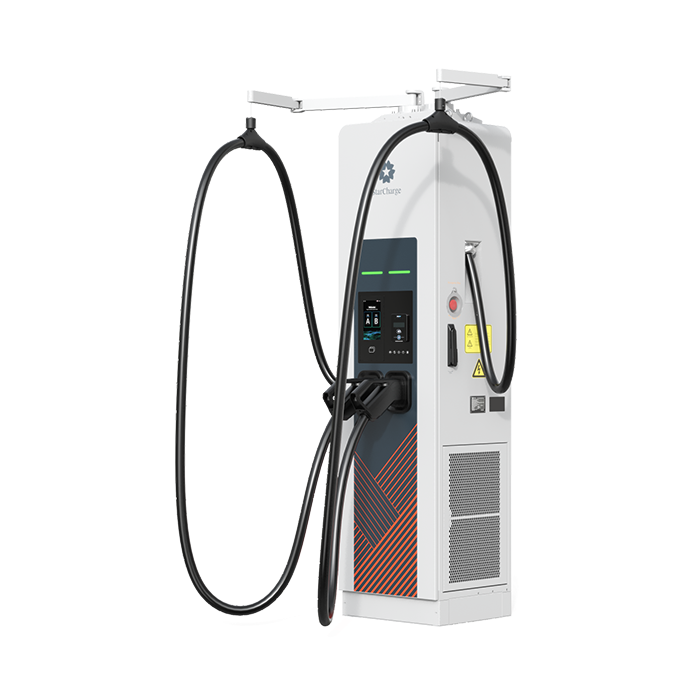
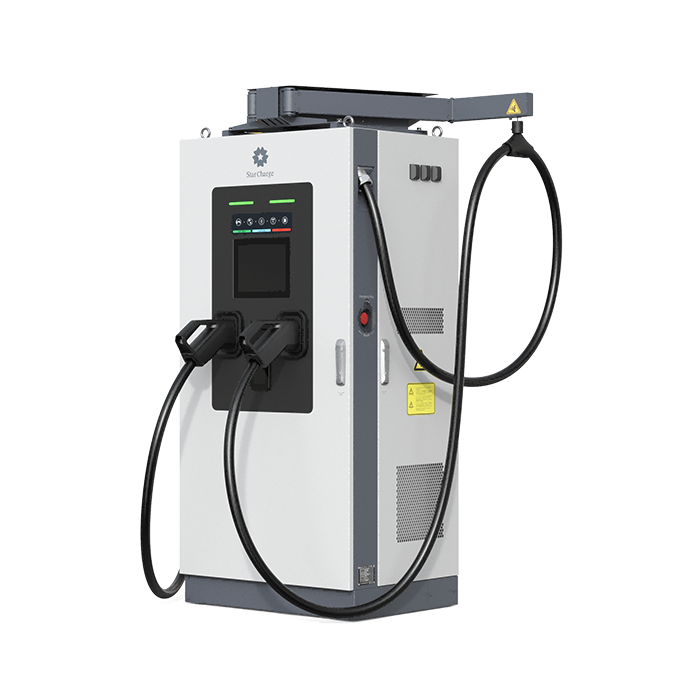
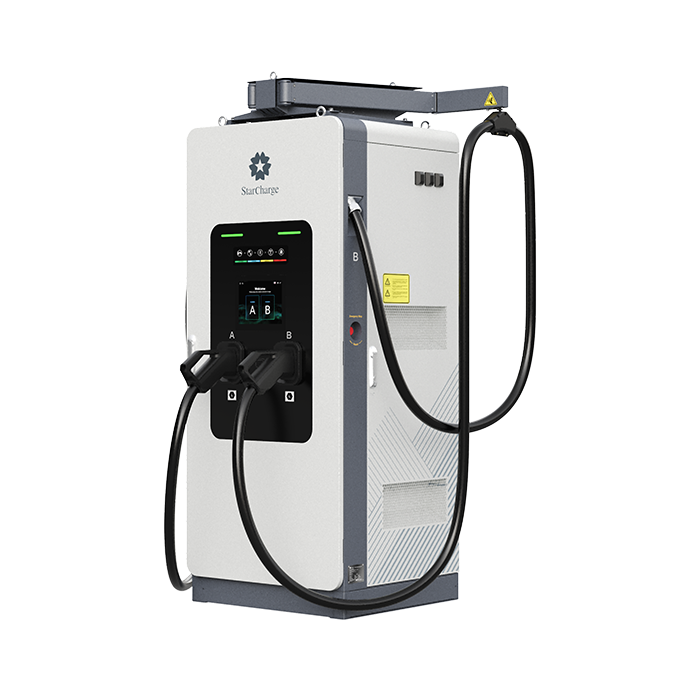
On the morning of August 4, the 2nd China EV Charging Infrastructure Technology Innovation Conference opened in Changzhou. Hosted by the Electric Transportation and Energy Storage Branch of the China Electricity Council (CEC) and the Energy Industry Electric Vehicle Charging Infrastructure Standardization Committee, and organized by StarCharge, the conference was held under the theme of 'Green and Low-Carbon, Safe and Efficient, Innovation-Led,' focusing on industry pain points in the charging infrastructure field, keeping an eye on technological transformation, interpreting cutting-edge trends in charging and battery swapping, and jointly exploring innovative industry development.
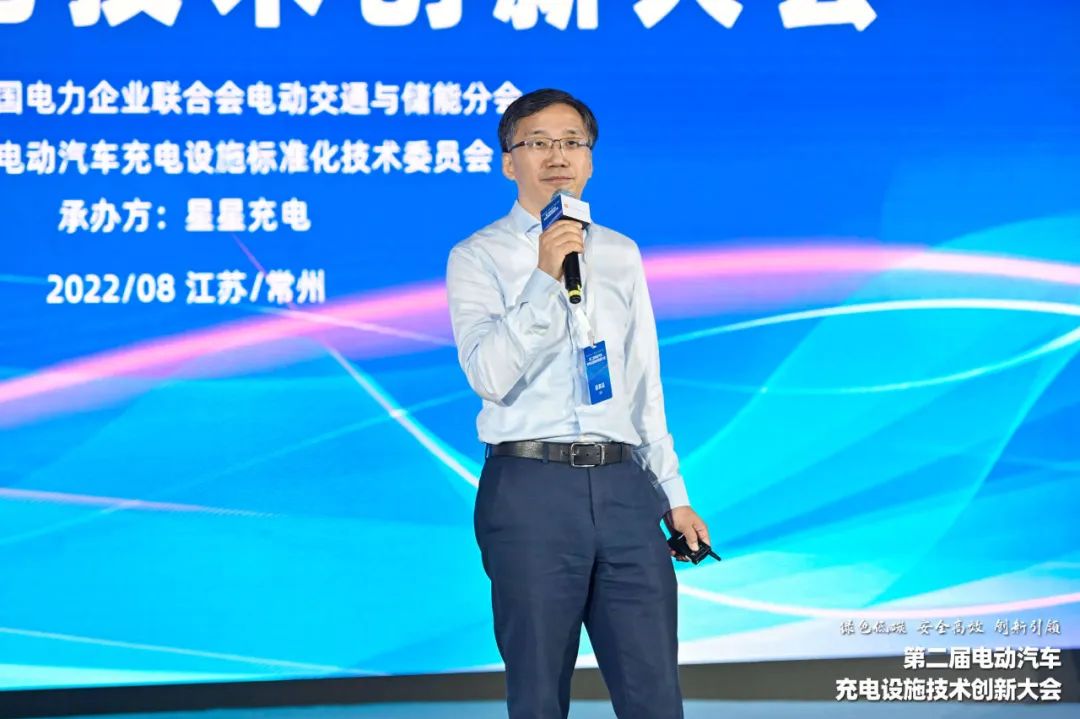
Liu Yongdong, Deputy Secretary-General of the China Electricity Council (CEC) and Director of the CEC Standardization Management Center, delivered a speech titled 'Report on EV Charging Infrastructure Technology and Industry Development.' The full transcript follows:
This session is intended to review and present the overall development of EV charging infrastructure and the future development of the industry, covering conductive charging, wireless charging, and battery swapping technologies. It should be said that during the 13th Five-Year Plan period, our charging infrastructure developed rapidly, and the scale of our electric vehicles has reached 10 million, entering a period of rapid growth.
In an article at the beginning of this year, I discussed the concept of the S-curve, which was also borrowed from other fields. The S-curve refers to the fact that in the early explosive stage of an industry, the climb is relatively slow, but once a certain scale is reached, the curve enters its S-shaped rise and a period of rapid growth. With our scale continuously expanding, technology constantly changing, and the industry ecosystem continuously evolving, how to think and plan at this moment is a question that every company needs to face.
In this process, however things change, technology is our most important consideration, and market logic is likewise our most important consideration. Therefore, in this process, we must attach great importance to sorting out the changes in technological development and the logical relationships behind them. To this end, the National Energy Administration issued the 'Implementation Opinions on Further Improving the Service and Support Capabilities of Charging Infrastructure.'
This document was originally intended to serve as a key implementation plan for the 14th Five-Year Plan period. The first plan, issued in 2015, set out a development plan for charging infrastructure and promoted major industry growth. Targeting the prominent problems of the 13th Five-Year Plan period—including planning, technology routes, and various scenarios, and even covering finance and other aspects—it puts forward targeted opinions and measures. I would especially emphasize the issue of appropriately staying ahead of demand, because the development of infrastructure cannot do without appropriately forward-looking deployment. The document also addresses the requirements for intelligent and efficient development, and I hope everyone present will pay attention to this document.
Next, I will share the latest developments in the entire field by key areas, scenarios, and technologies.
The first is high-power charging. Very encouragingly, since high-power charging was first discussed at the first conference in 2016, after six years of cultivation, the industry has gained a high level of recognition that high-power charging is needed to solve the problem of poor charging experience, and the industry is now researching and developing megawatt-level charging. Since charging for electric vehicles can also extend to electric heavy-duty trucks and electric aircraft, the world is currently exploring the development of megawatt-level charging, which has received widespread attention and support in this process.
High-power charging is not just an interface—it is a systems engineering effort involving the vehicle, the connector, the pile, and more, and I hope everyone pays great attention to it. At the same time, everyone is asked to attach great importance to temperature management and monitoring. High-power charging inevitably brings safety hazards, so deploying liquid cooling and strengthening temperature control are especially important. How to accurately grasp the changes brought by temperature in the charging connector, so as to prevent damage to the product system from rising temperatures during charging—including interface components, detection methods, and so on—poses challenges; if 800V is adopted, the current-related temperature will be relatively reduced.
Wireless charging is also an unavoidable topic. Limited by conditions, wireless charging has not yet been widely applied, but it is very gratifying to see that mass-produced models are now being launched in China with wireless charging available as an optional high-end feature. The benefit of wireless charging is its natural, inherent connection to the grid, providing favorable connection conditions for future interaction between electric vehicles and the grid. Wireless charging technology involves a wide range of fields—it is an integration of infrastructure, batteries, and communications, a relatively complex environment, with considerable technical difficulty. Among the issues, safety is a topic of great concern to the industry: infrastructure safety, functional safety, thermal management, battery safety, and so on, all of which pose considerable challenges.
Another very important factor is the issue of interoperability, which involves the vehicle side—different manufacturers, different models, and even different power levels—and how to achieve interoperability. Very encouragingly, a series of relevant standards for wireless charging has now been released, providing basic standards support for wireless charging, and a standard coil with China's own independent intellectual property rights has also been proposed, solving the interface problem of wireless charging.
Alongside wireless charging, there is in fact another branch, namely robotic-arm-assisted charging, which currently takes many forms. Generally speaking, these include charging bows for city buses, as well as charging robots and robotic manipulators for passenger cars.
For the three situations above, the conditions differ, the circumstances differ, and the requirements differ, but the very core issues remain identification: one is the issue of standard interoperability; the other is the issue of communication control. These are problems that trouble industry development—especially interoperability, which involves standards—and they are also quite challenging. In response to this problem, the market has made quite a few explorations. At present, the marketization and industrialization of bus charging have been promoted relatively well, while other fields are still being explored. We can see that the greater the lack of standardization, the harder it is for the industry to scale up.
Battery swapping has been very hot these past two years. The compatibility and interoperability of battery swapping and the difficulties of the industry are not entirely technical problems—they are more industry problems and business model problems. At the same time, data interconnection also needs to be resolved: connecting batteries and connecting vehicles.
Heavy-duty truck battery swapping has excellent prospects and a very good business model, and is relatively capable of solving the relevant problems. Of course, heavy-duty truck battery swapping today is also divided into the rear-mounted type and the chassis-mounted type. Chassis swapping can better solve the vehicle's load-bearing problem. In 2020, the Ministry of Industry and Information Technology and the National Energy Administration launched pilot cities for heavy-duty trucks, conducting exchanges and summaries on national standards for battery swapping—including interface standards, communication protocol standards, and design specifications—in the pilot cities, hoping to take a solid step forward in standardization.
The fourth aspect is key components and metering. When charging piles are in operation, ordinary people have to pay out of their own pockets, so the accuracy of metering becomes especially important. In terms of standards, we have technical specifications for AC metering, and likewise corresponding verification specifications for AC metering; there are certain differences between these two standards, which is an objective reality. On the basis of meeting national requirements, we should make the equipment safer and more reliable, while also metering more accurately, so as to achieve the normal O&M of charging equipment.
Cybersecurity seems distant, yet is also close at hand. Cybersecurity will be put on our agenda. Although platforms and user apps can apply existing requirements related to network information, the charging equipment itself is still a weak link. In particular, our charging modules are very vulnerable to attack, and great attention must be paid to controlling the weak links.
Modules are key components. They have developed rapidly in the past two years, with the development of high-power modules becoming ever more significant—from the 15 kW and 20 kW modules often discussed in the past, to today's 30 kW and 40 kW modules, and even higher-power modules have now appeared. Standardization is also a very meaningful topic. A few years ago, when module dimensions were discussed, there was considerable debate within the industry; now there is growing convergence, which is inseparable from the development of industry patterns.
Liquid cooling, or independent sealed channels, is also a very important part of modules. As it stands, adopting liquid-cooled technology can better address the safety and reliability that equipment requires under all kinds of harsh conditions. Of course, liquid cooling itself also has difficulties, such as cost and future maintenance.
Noise is also an issue. We have put forward a requirement in the standards, but in actual scenarios, ordinary users still have some complaints. In this process, we hope that our R&D institutions will conduct further research on module noise and protection design, and further improve the protection level of these modules.
Regarding the problem of temperature rise caused by achieving high power, we mentioned liquid cooling. Liquid cooling technology includes water cooling and oil cooling, and the insulation and protection issues that come with it also need to be better resolved.
The interaction between electric vehicles and the grid is an issue that has been discussed since 2010 and that our industry must consider. The first is orderly charging, which solves the problem of more charging on the same capacity; with time, this is increasingly being reflected and applied. The second is load aggregation—achieving orderly charging of all electric vehicles within a city. This issue is becoming ever more prominent, especially with the very hot weather this year in our eastern coastal regions, which requires solving the load aggregation problem. Now many cities, including Tianjin and Beijing, have also begun demonstrating city-scale aggregation, also addressing orderly vehicle-grid charging.
V2G is the application through which we hope to achieve large-scale interaction between the grid and electric vehicles. What is discussed more now is charging and discharging within microgrids—charging and discharging in scenarios such as electric vehicles with buildings and homes. But we hope to achieve larger-scale orderly charging and discharging, realizing V2G development in the true sense. Of course, this will also depend on the construction of electricity markets and the overall development of related supporting systems before it can be realized.