How can charging services be upgraded? How can vehicle-grid interaction be achieved? Where does the key to efficient operation of public charging stations lie? What measures can safeguard charging safety? Now that new energy vehicles have entered the ten-million scale, what should we pay attention to in charging infrastructure construction... At the 2nd China EV Charging Infrastructure Technology Innovation Conference held August 4-August 5, more than 30 leading experts, corporate R&D heads, and engineers from the charging industry gathered together, delivering a 'purely substantive' technical feast.
01
Applause: A Purely Technical Feast
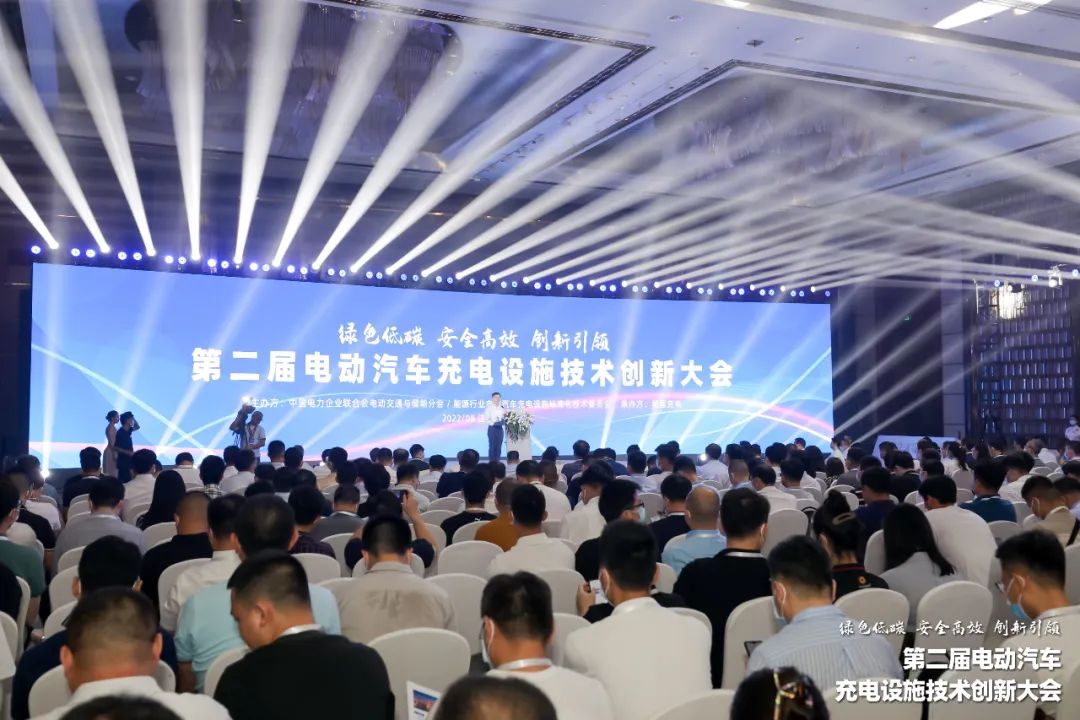
The conference was hosted by the Electric Transportation and Energy Storage Branch of the China Electricity Council (CEC) and the Energy Industry Electric Vehicle Charging Infrastructure Standardization Technical Committee, and organized by StarCharge. It focused on industry pain points in the charging infrastructure field, kept an eye on technological transformation, interpreted cutting-edge trends in charging and battery swapping, and jointly explored innovative development. The conference concluded successfully at noon on August 5.
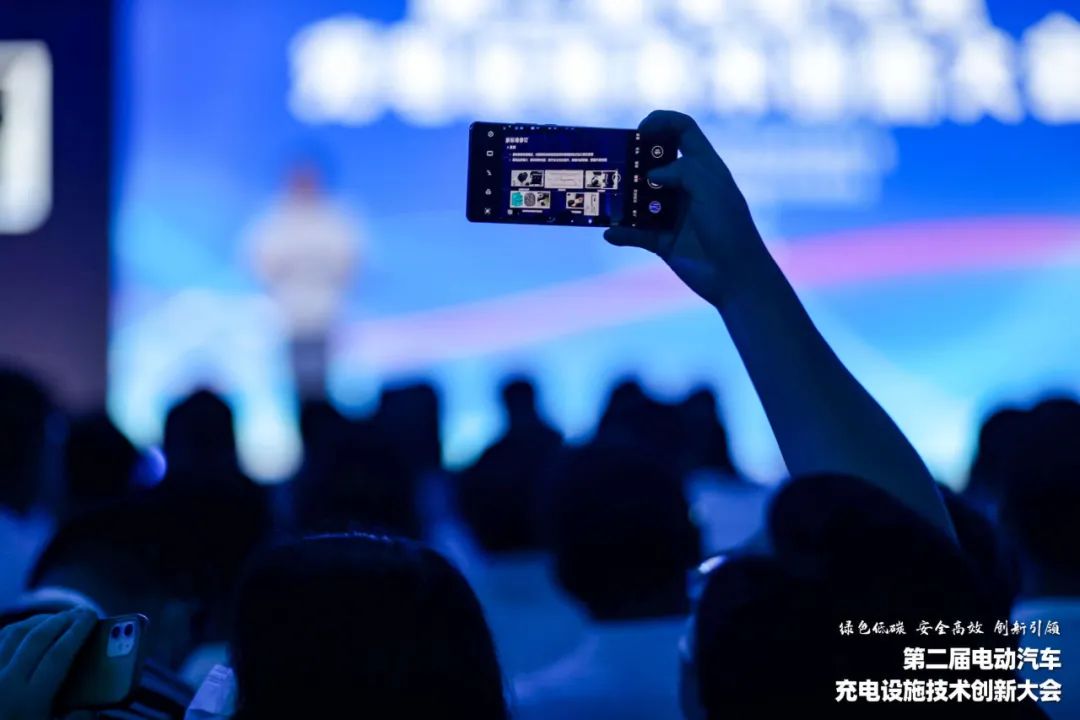
Looking back at the conference, on the opening day, guests interpreted cutting-edge trends in the charging field and jointly explored innovative industry development through keynote sharing, special seminars, technical salons, and other formats. The event not only released two technical white papers and a report on EV charging infrastructure technology and industry development, zeroing in on industry pain points and difficulties in search of technological breakthroughs, but also held special seminars on key development areas such as the formulation and revision of next-generation conductive charging standards, battery swapping and energy storage applications, green electricity trading and metering, and streamlined O&M. At the same time, technical sharing and exchanges were conducted on key charging infrastructure application scenarios to lead innovative industry development. On August 5, participants further shared and exchanged on key application scenarios.
Among the speakers, Liu Bowen, a dedicated officer of the Standardization Management Center of the China Electricity Council, presented the 'Action Plan for EV Charging Infrastructure Services Supporting Carbon Peaking and Carbon Neutrality.' Liu Bowen noted that in the next step, the Branch and the Standardization Committee will carry out concrete work in areas such as building model projects for residential areas, promoting the construction of expressway charging stations, establishing a standards maintenance group and revising the T/CEC 102 'EV Charging and Battery-Swapping Service Information Exchange' series of standards, standardizing load aggregation for green electricity trading, formulating charging pile energy efficiency standards and researching energy efficiency labeling, carbon footprint calculation for charging equipment and zero-carbon demonstration stations, preliminary research on standards for charging services and grid interaction, and online monitoring of charging station status and status-maintenance research.
In the speech on the 'Evolution of Public Charging Cloud Platform Products and Technologies,' Wang Di, Senior Vice President of StarCharge, stated that the future product and technology evolution of the public charging cloud platform must solve several problems: first, deepening the application of the Internet of Things, cloud computing, blockchain, and AI; at the same time, meeting the challenges of security and scalability; and finally, interacting in a friendly manner with the grid.
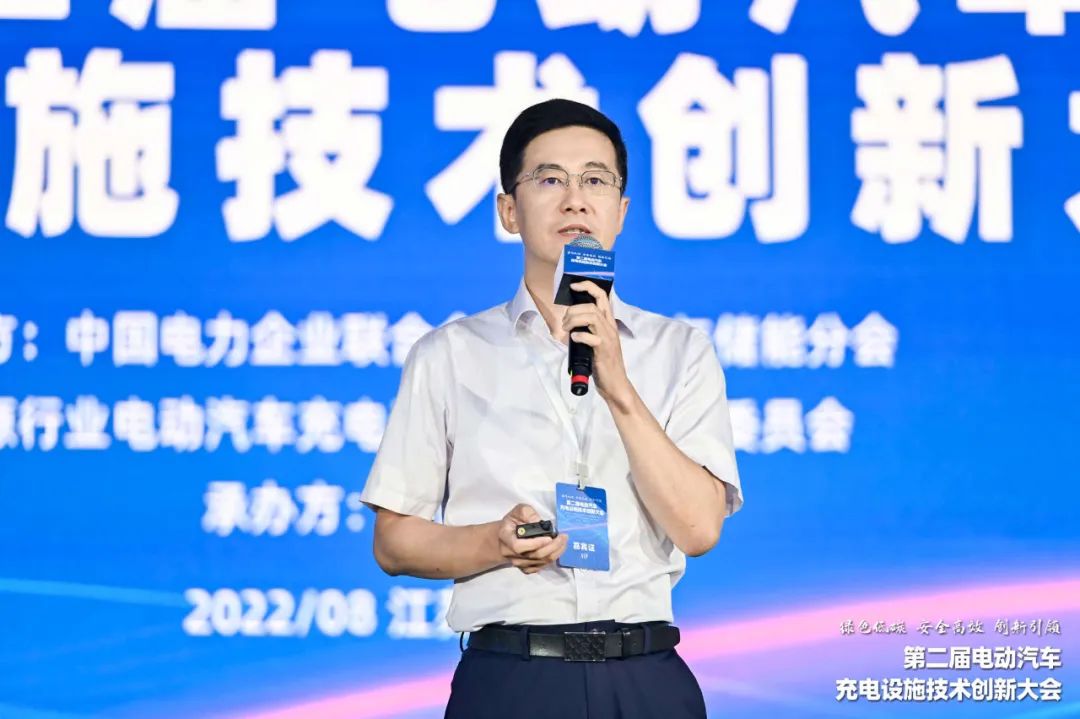
▲ Wang Di, Senior Vice President of StarCharge
Li Houzhi, Chief Expert of Charging Operations at State Grid Electric Vehicle Service Co., Ltd., shared his practices and reflections on charging network operation innovation and offered suggestions for the development of the whole industry: first, the industry as a whole should jointly strengthen the layout of station construction planning and match it well with grid planning; second, attention should be paid to community charging difficulties, encouraging private pile users to charge in an orderly manner and share their private piles; third, the vehicle-grid interaction system should be continuously built up, unified technical standards should be formed, policy advancement should be accelerated, and sustainable business models should be explored; fourth, research on key whole-station technologies should be strengthened to reduce operating costs and equipment renewal costs; and finally, charging safety must be safeguarded and safety hazards resolved together.
In addition, six guests from the China Electricity Council (CEC), State Grid Corporation of China, CICC Capital, and other organizations held exchanges and discussions around the topic: 'Now that electric vehicles have entered the ten-million scale, what key directions should be focused on in the high-quality development of charging infrastructure?'
02
In Focus: 'Three-Network Integration' and 'Green Electricity Trading'
Beyond the brilliant speeches on stage, the discussions off stage were also lively and full of highlights. The 'three-network integration strategy' and 'green electricity trading' proposed by Shao Danwei, Chairwoman of Wanbang Digital Energy and founder of StarCharge, drew the attention of many mainstream media outlets on site.
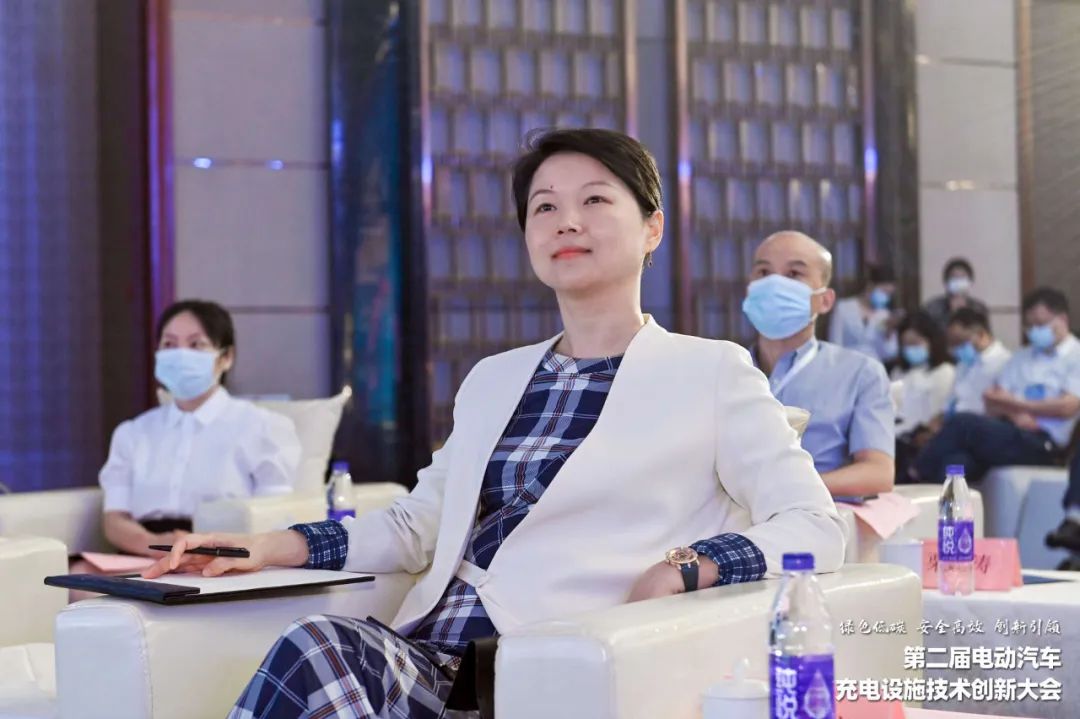
▲ Shao Danwei, Chairwoman of Wanbang Digital Energy and Founder of StarCharge
'StarCharge has two visions for energy: first, energy assets installed by the grandparents' generation can still be used free of charge by the grandchildren's generation; second, communities of the future will become a harmonious world of mutual energy assistance and sharing,' Shao Danwei said. The path to realizing this vision is StarCharge's 'three-network integration strategy': using industrial internet technology to interconnect energy on one end and industry on the other, ultimately building a three-network integration platform that brings together the 'charging network, energy network, and user network,' and ultimately fulfilling the beautiful vision of building the Mobile Energy Internet.
It is understood that China's green electricity industry has now developed to the 3.0 stage, with Jiangsu taking the lead in introducing policies for distributed green electricity spot trading and actively promoting the transformation and upgrading of the new energy sector. StarCharge, for its part, was the first in China to practice green electricity trading and has complete and mature experience in commissioning PV-storage-charging systems.
As one of the few digital energy companies in the industry whose green electricity trading covers the whole country, whose green electricity trading products span a wide range, and which has nationwide charging station operation capabilities, StarCharge is focusing on building a distributed green electricity spot trading platform, enabling surplus electricity to be sold on its own while meeting residents' 'self-built, self-used' needs, promoting the recycling of energy assets, allowing new energy vehicles to run on new energy electricity at an early date, and truly achieving zero carbon.
03
Leading the Way: Two Technical White Papers Authoritatively Released
At this conference, in addition to technical sharing and discussions, two technical white papers were also released: the 'EV Charging and Battery-Swapping Infrastructure Construction and Acceptance Workbook' and the 'Research Report on New Transportation Energy Infrastructure.'
In April 2022, at the 11th meeting of the Central Financial and Economic Affairs Commission, it was proposed to strengthen the construction of network-type infrastructure such as transportation, energy, and water conservancy, accelerate the building of new-type infrastructure, develop a modern infrastructure system, make networking, gap-filling, and chain-strengthening the focus of construction, and strive to improve network efficiency.
Against this backdrop, based on the development of the industry, the white paper proposes a conceptual definition of new-type energy infrastructure from the perspective of integrated development. With safety, low carbon, convenience, and economy as its goals, it achieves two-way interaction of traffic flows, energy flows, and information flows through deep integration with urban facilities, transportation, and energy systems, providing systematic recharging solutions for different new energy vehicles.
Zhou Libo, Division Director of the Standardization Management Center of the China Electricity Council, interpreted the 'EV Charging and Battery-Swapping Infrastructure Construction and Acceptance Workbook' on site, pointing out that the standards and technical requirements for charging infrastructure are highly fragmented. In response, focusing on EV charging stations, battery swap stations, and dispersed electric facilities, the white paper summarizes the construction and acceptance work of charging and battery-swapping infrastructure according to pre-construction, engineering construction, and acceptance specifications, and consolidates the construction procedures, construction requirements, and acceptance standards for charging infrastructure.
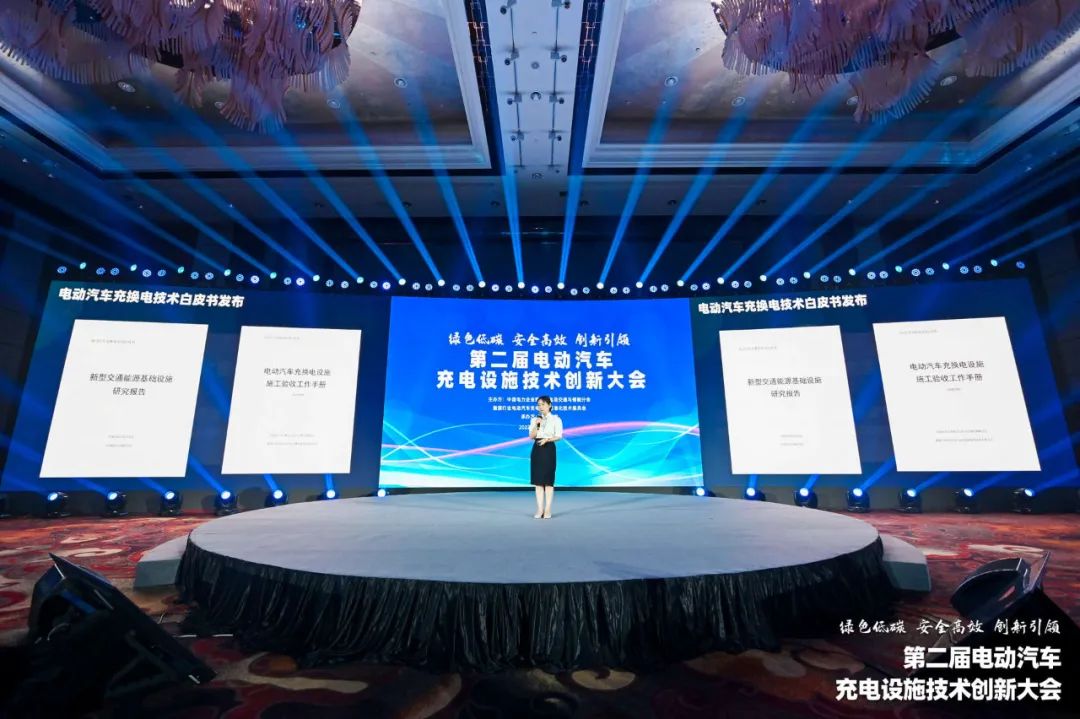
The 'Research Report on New Transportation Energy Infrastructure,' meanwhile, reviews seven major types of energy infrastructure: intelligent urban and rural slow-charging networks, super-fast charging, integrated PV-storage-charging facilities, new-generation battery swap stations, comprehensive oil-gas-hydrogen-electricity energy stations, intelligent battery warehousing and distribution centers, and mobile energy service facilities. These seven types of energy infrastructure are coordinated with new energy vehicles, with urban planning, with the new-type power system, and with the transportation road network.
Since its founding, the conference has consistently championed an engineer culture, yet has gone beyond technical exchange, playing an effective role in driving the development of the entire new energy industry. In the future, the new energy industry chain participants at the conference will continue to move forward hand in hand, striving to break through the development difficulties of charging infrastructure, promote and lead industry technology, support green low-carbon development and the green energy transition, and achieve the great goals of 'dual carbon.'