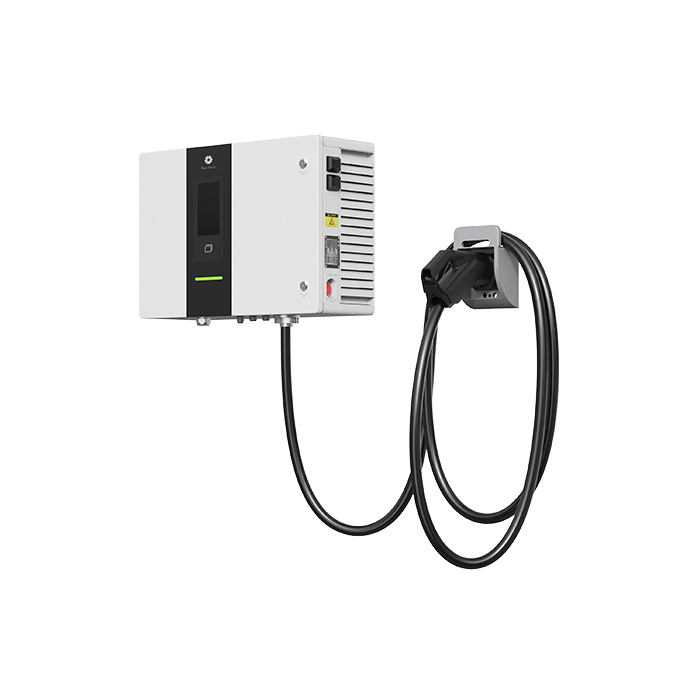
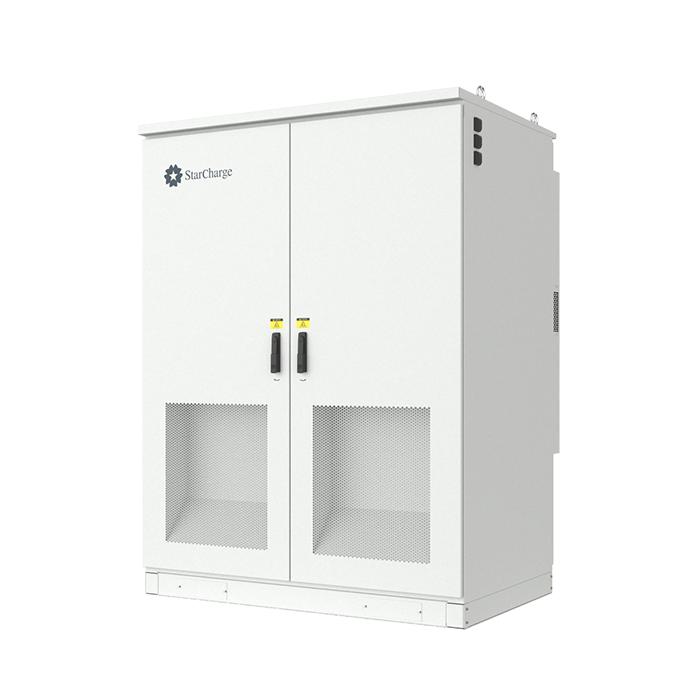
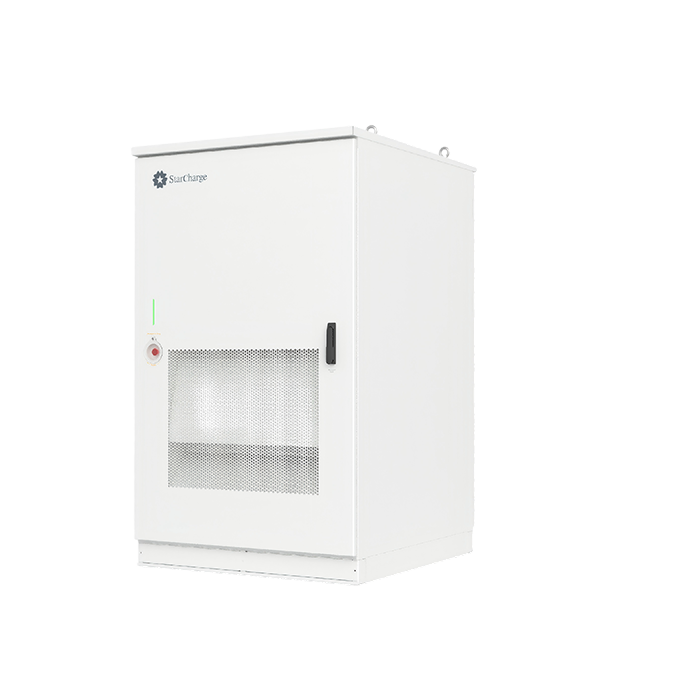
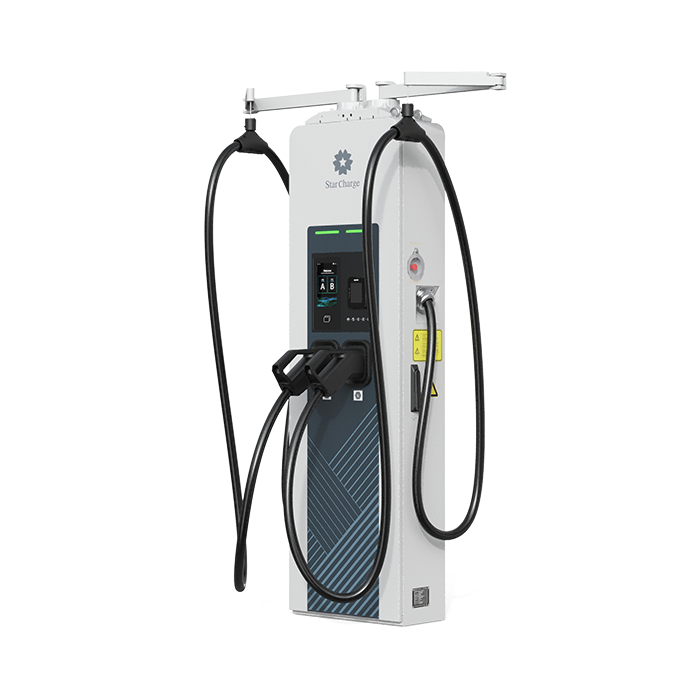
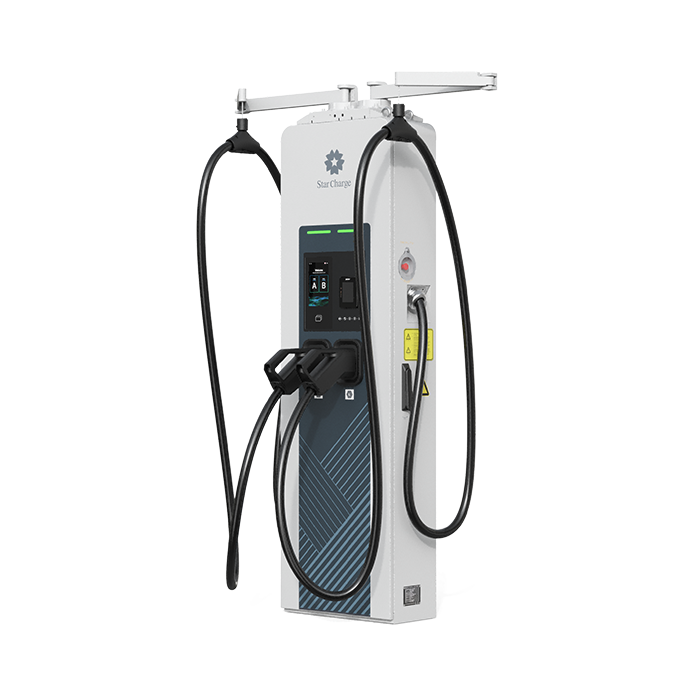
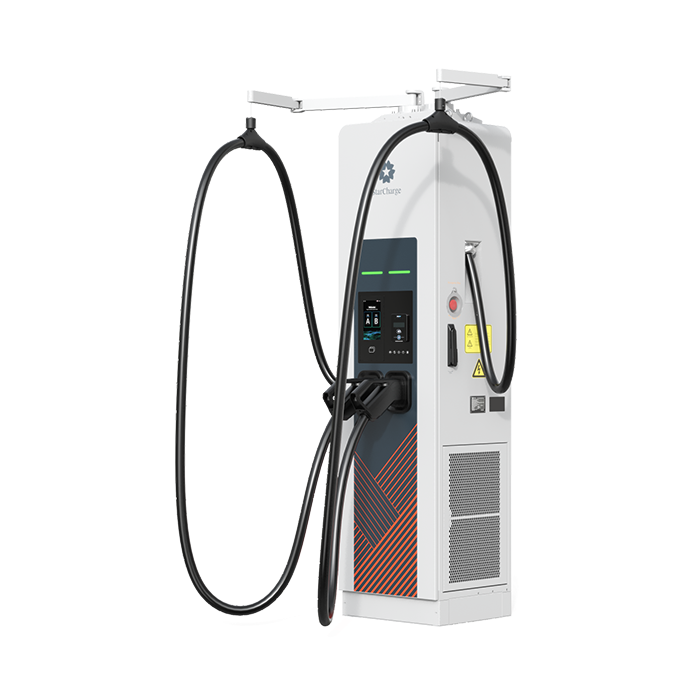
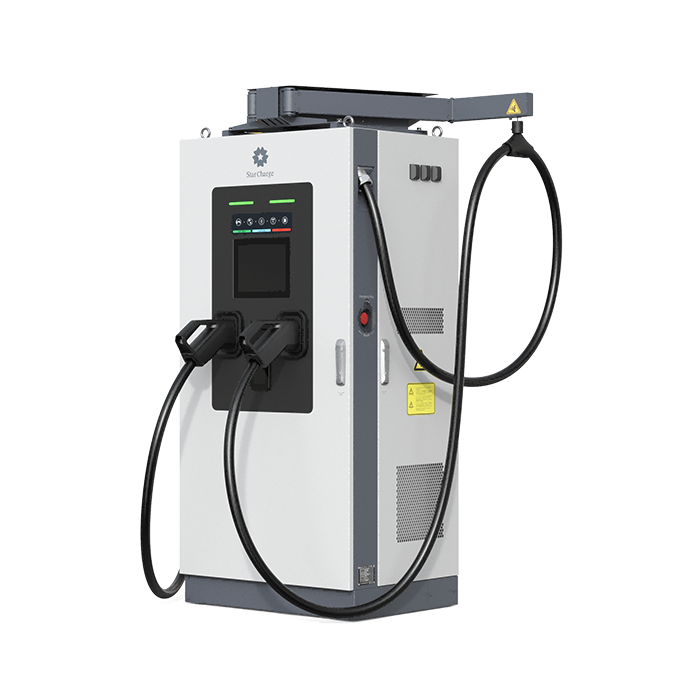
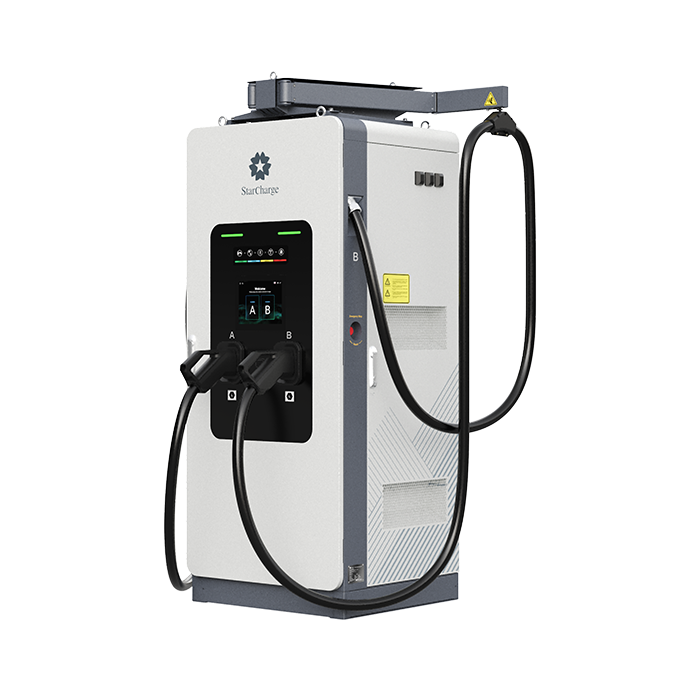
On the morning of August 4, the 2nd China EV Charging Infrastructure Technology Innovation Conference opened in Changzhou. Hosted by the Electric Transportation and Energy Storage Branch of the China Electricity Council (CEC) and the Energy Industry Electric Vehicle Charging Infrastructure Standardization Committee, and organized by StarCharge, the conference was held under the theme of 'Green and Low-Carbon, Safe and Efficient, Innovation-Led,' focusing on industry pain points in the charging infrastructure field, keeping an eye on technological transformation, interpreting cutting-edge trends in charging and battery swapping, and jointly exploring innovative industry development.

Yang Ye, Senior Engineer at State Grid Electric Vehicle Service Co., Ltd., delivered a speech titled 'Key Technologies for Vehicle-Grid Interaction, Upgrading from Individual to Group Intelligence'. The full transcript is as follows:
First, let me introduce the background of why we are doing vehicle-grid interaction. Under the construction of the new power system, we face challenges of adequacy and availability. By 2030, in order to absorb 1.2 billion kW of photovoltaic and wind capacity, China Southern Power Grid and State Grid have planned 700 million kW of balancing resources: 600 million kW on the generation side and 100 million kW on the user side. By 2030, electric vehicles will exceed 80 million, with a penetration rate of over 20%. By awakening the potential of the dormant traction batteries on vehicles through market and technical means, flexible resources can be provided to the grid. But to realize the utilization of this flexibility potential, we need to handle and solve various technical challenges.
First, let me introduce the vehicle-grid interaction technology system, which consists of five parts. The first part is user guidance: connecting users' vehicles and traction batteries to the grid through charging piles to establish an energy connection. The second part is interconnection, establishing a connection at the information level. Then the third part is local interaction, mainly multi-pile coordination at the distribution network level to smooth the overall peak-valley difference of electricity use. Then, through the fourth part, aggregation management, resources are integrated into the overall dispatching process of the power system. Through the fifth part, load regulation, renewable energy is absorbed using electric vehicle resources at the level of the main grid.
Based on the vehicle-grid interaction technology system, let me first introduce the technology of individual orderly charging participating in distribution network interaction. To introduce the concept: we need to consider users' charging needs and the safe operating state of the grid, with the goal of minimal impact on the grid or optimal economics, using economic and technical means — whether guiding or regulating charging time and power. The currently adopted technical route is direct control via a 4G-connected platform. When users launch the APP, what they care about most is whether charging meets their needs when they use the vehicle. We use artificial intelligence technology to perceive users' vehicle use and charging needs by analyzing their charging behavior, travel habits, and weather conditions. At the same time, combined with the safe operation requirements of the transformer district, charging prices, and the revenue from piles participating in the electricity market, we formulate online and in real time a charging plan that is friendly to both users and the grid, improving charging convenience and charging safety.
Specifically, by combining users' needs with the physical constraints of charging piles and batteries, and considering users' charging prices, we can use the objective function combined with the constraints to create a personalized charging plan for each user. As you can see, when users naturally return home and charge, the red curve overlaps with the peak of the transformer district's base load curve. But if orderly charging technology is used, small-power charging can be carried out in the period right after the user connects, and after the overall load drops, the user's charging power is raised, shifting the load off-peak while meeting the user's driving needs.
If we extend the same technology to all the charging piles in an entire residential community, where everyone naturally charges as soon as they get home, in the same community only 33 uncontrolled charging piles can be supported simultaneously before the overall load approaches 100%. With the orderly charging technology just mentioned, 85 charging piles can be supported simultaneously while meeting all users' charging needs; at that point the peak-valley difference is reduced by 30%, and the overall load only approaches 80%. If we compare 1,000 natural-charging users with 1,000 orderly-charging users, the effect is even more significant: grid pressure is relieved in the first half of the night before midnight, and wind power can be absorbed in the second half after midnight.
Besides orderly charging to control charging load, there is also V2G technology. The concept is that, within the range permitted by the user and while meeting the user's basic travel requirements, the vehicle's traction battery supplies energy to the grid through V2G technology to assist grid operation, such as load balancing or frequency control. There are now several fairly mature V2G pile products; if costs can be further reduced, their power rating can reach the same level as ordinary DC piles on the market.
To formulate the optimal charge-discharge plan for vehicle owners, we mainly consider cost factors: on one hand, AC-DC conversion losses, and on the other, battery degradation from discharging. Our goal is to minimize the cost of the charging and discharging process while satisfying the user's travel constraints, the transformer district's constraints, and battery degradation constraints. In terms of specific platform technology, we obtain the complex conditions of the distribution transformer district in real time through distribution automation and intelligent fusion terminals. Control can be carried out locally or via the platform to solve the transformer district's problems.
As for the actual application results, the effect is not much different from orderly charging — both relieve heavy overload and achieve valley filling at off-peak times. In fact, we use discharge to solve the problem, meaning other users no longer need to adjust; a few V2G piles can complete the temporary regulation. If in the future all vehicles support V2G and participate in the real-time operation of the grid to balance grid fluctuations, the potential is enormous, but we still need to solve the problems of standards and cost.
In the fourth part, we aggregate various electric vehicle resources to participate in interaction with the main grid. The purpose of aggregation is mainly to absorb renewable energy: absorbing surplus photovoltaic power during the day and surplus wind power at night. This can be achieved through grid dispatch and load aggregation platforms — the orderly charging and V2G platforms mentioned earlier — and ultimately through controllable piles. Next, I will mainly introduce the load aggregation and regulation platform, which serves M types of grid services and aggregates N types of resources. The key technologies here are load and market forecasting, optimal market bidding, and aggregated load regulation.
The first step is to fully understand the overall charging load. Through a forecasting algorithm library, combined with meteorological data and user charging data, we perform day-ahead load forecasting and ultra-short-term load forecasting, mainly for participation in the day-ahead electricity market and the intraday real-time market. After understanding the base load, we also need to combine the physically adjustable limits of charging piles and batteries with users' willingness to participate, to find the space we can regulate. With minimal impact on user experience, we guide users to aggregate and participate in the market.
The second step is to understand the demand side, that is, the grid. Taking the ancillary services market as an example, we forecast prices and price periods, reflecting the grid's direction and time windows for load regulation. Combining the characteristics of both the supply and demand sides, we inform the market of the load plan and the regulation plan, then perform optimized control within the market, allocating load deviations to the more suitable regulated groups — such as orderly charging, V2G, buses, and public stations — to eliminate deviations.
In conclusion, the technologies of electric vehicles participating in distribution network interaction through orderly charging and V2G have been fairly fully verified and possess the technical foundation for standard-setting and promotion, but further efforts are still needed on cost and user acceptance. Electric vehicle aggregation participating in grid ancillary services or demand response has been verified in some provinces and cities, but a normalized market mechanism is still needed to continuously tap the aggregated regulation potential. As the number of vehicles and piles grows, the importance of electric vehicles as a flexible resource serving new power system construction and the 'dual carbon' goals will become increasingly prominent. This requires gradual breakthroughs in technologies at different levels, ultimately forming a win-win vehicle-grid interaction ecosystem, which requires the joint efforts of the grid and operators. Most importantly, every vehicle owner must be willing or interested in participating in vehicle-grid interaction in order to achieve vehicle-grid interaction at scale.