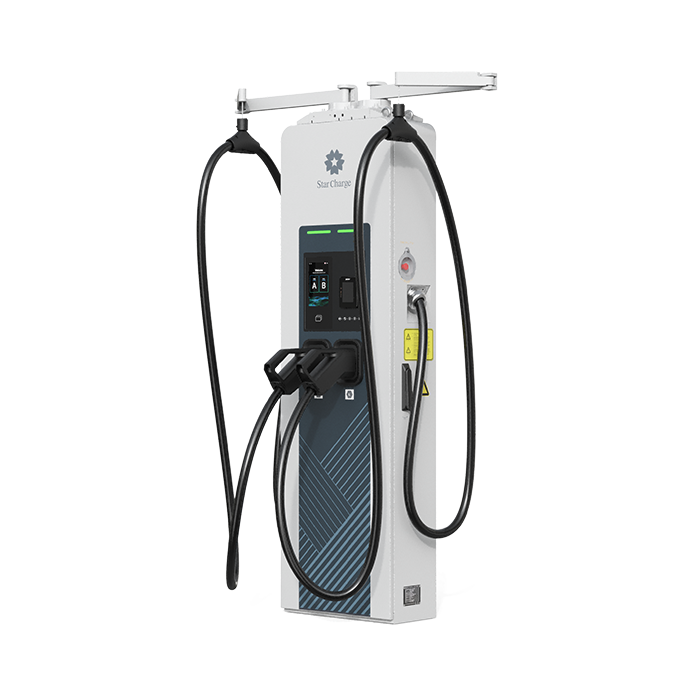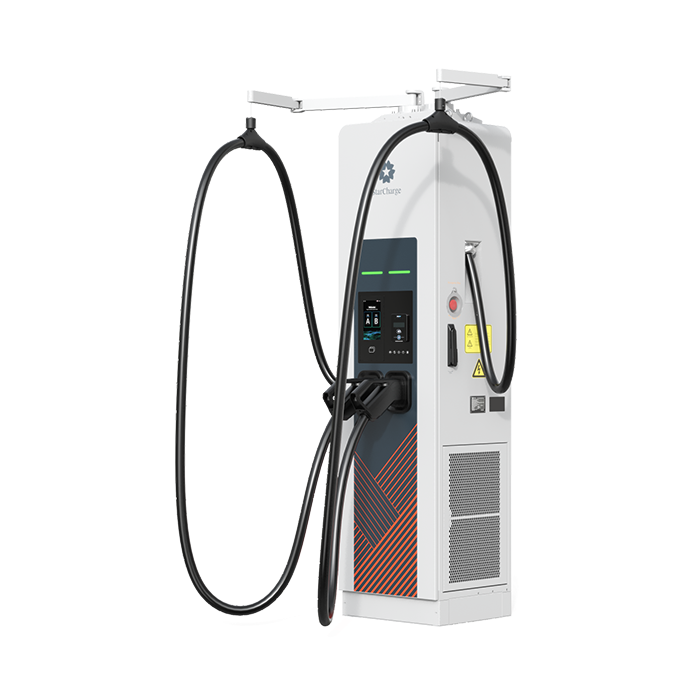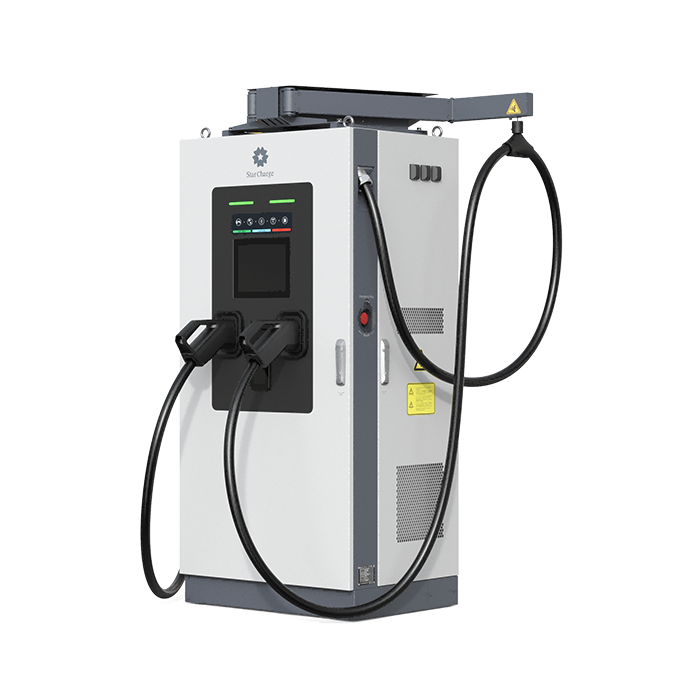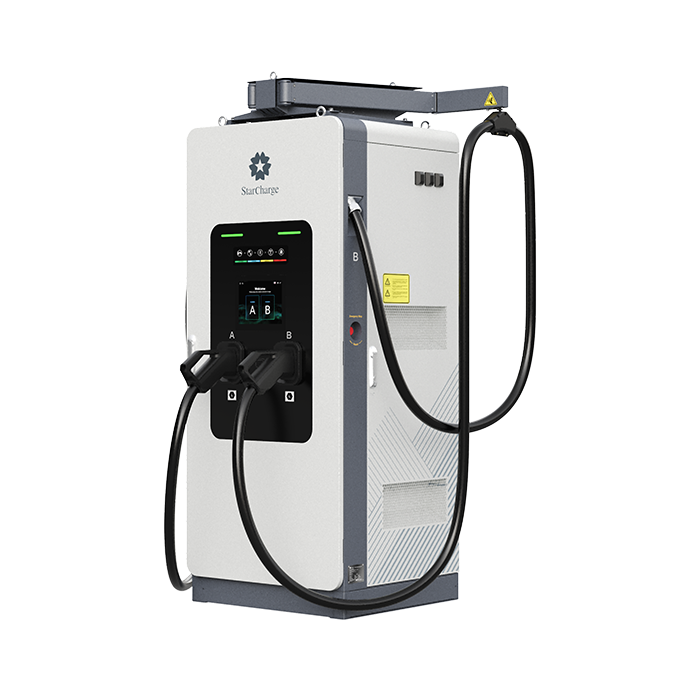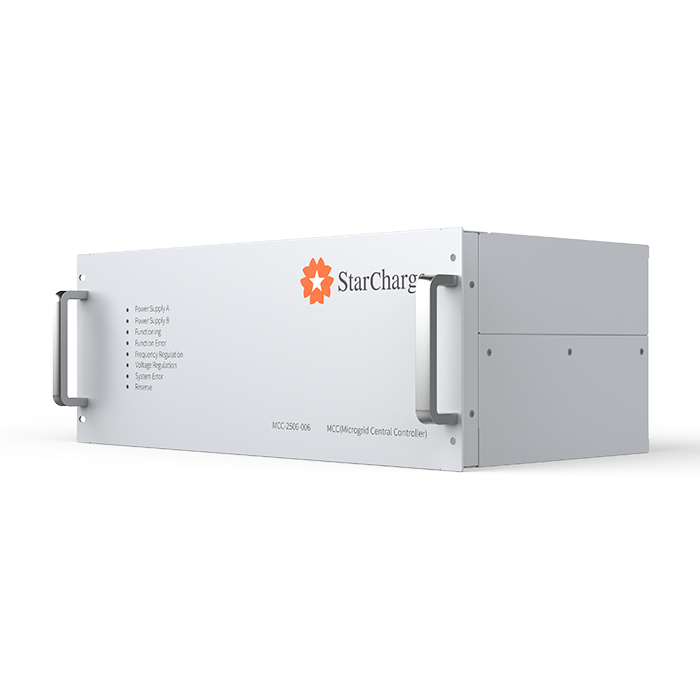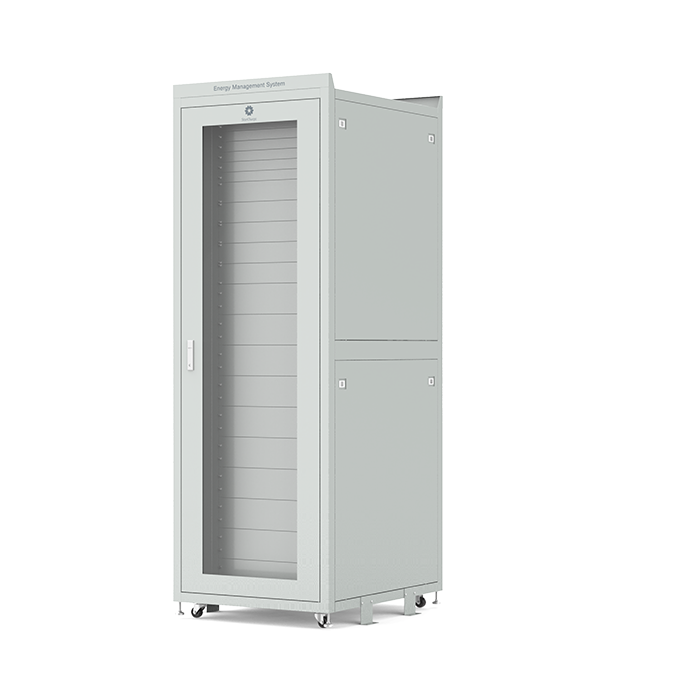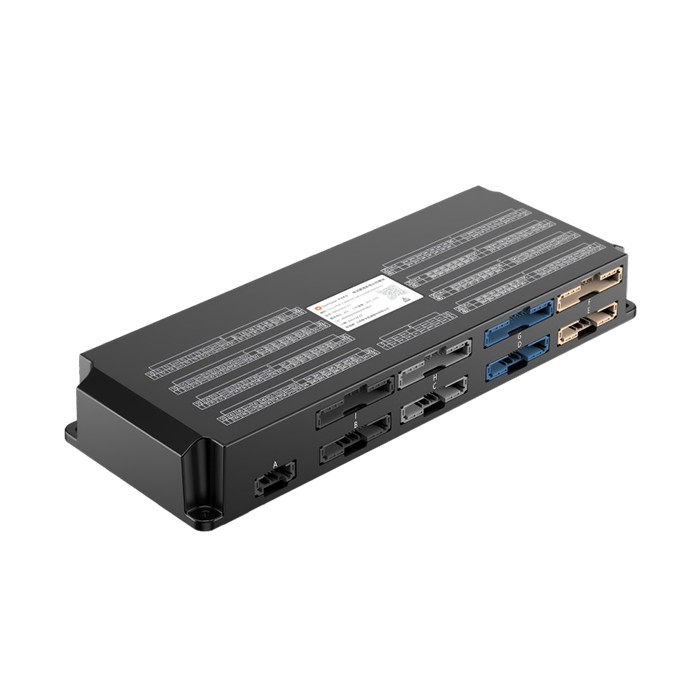
Across the three thousand great worlds, wisdom is expounded at Mount Sumeru. On September 23, 2020, the 3rd Sumeru Summit was held in Changzhou, Jiangsu. Hosted by StarCharge (Wanbang Digital Energy Co., Ltd.), the conference centered on the theme of the 'Mobile Energy Internet,' with more than 800 guests spanning government, industry, academia, research, media, and finance.
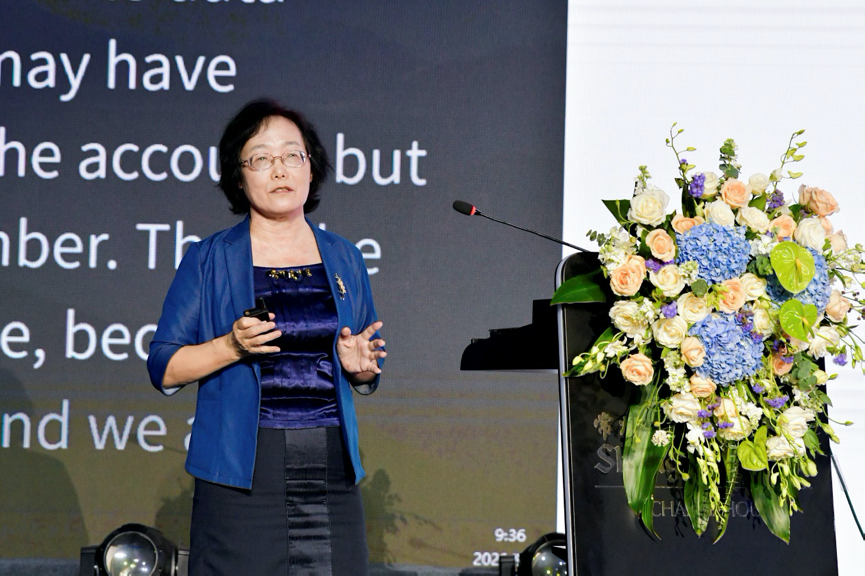
Xu Yanhua, Secretary-General of the China Electric Vehicle Charging Infrastructure Promotion Alliance, delivered a speech titled 'Opportunities and Challenges of Charging under New Infrastructure'. The full transcript is as follows:
Distinguished guests, ladies and gentlemen, good morning. First, congratulations on the convening of this Sumeru Summit, and my thanks to Chairwoman Shao for the invitation. This year is the final year of the 13th Five-Year Plan period. Not long ago, the China Electric Vehicle Charging Infrastructure Promotion Alliance also organized the industry's leading enterprises to launch a research project on industry development during the 14th Five-Year Plan period. Here I would like to share with you my personal thoughts and suggestions on the 14th Five-Year Plan; please correct me where I am wrong.
I think the 13th Five-Year Plan period can be summarized in three aspects:
First, we built the world's largest charging infrastructure network, strongly supporting the promotion and application of new energy vehicles. The numbers can show this: at the end of 2015 there were fewer than 50,000 public piles serving 500,000 new energy vehicles. By this August, our public charging piles were approaching 600,000, and private dedicated piles were approaching 800,000. New energy vehicle ownership stood at about 4.5 million as of August; at the end of the 13th Five-Year Plan period, we had more than 1.4 million piles serving more than 4 million new energy vehicles.
Second, we have formed a complete industry chain covering equipment manufacturing, installation services, and operations and O&M, and we have also formed an industry landscape with diverse participants. We also have cornerstone enterprises of the industry such as StarCharge and State Grid.
Third, technological innovation and business model innovation are extremely active, which is very important for achieving such rapid development. I will not go through the technological innovations one by one — yesterday StarCharge's Mr. Shao talked about many of them. The same goes for business model innovation: deep vehicle-pile integration, deep binding of piles with mobility services, and the empowerment of traditional energy transformation have basically taken shape, and of course there are also business models such as the sharing of charging and battery-swap station resources, which I will not list one by one.
Now looking at the 14th Five-Year Plan period, I have summarized three 'new' themes, namelynew infrastructure, new opportunities, and new challenges. In my understanding, new infrastructure has three levels of significance for industry development:
1. It helps us achieve high-quality development;
2. It helps policy resources tilt toward our industry;
3. We need the empowerment of the investment community and capital — this effect is bound to show. Then there are the new opportunities: during the 13th Five-Year Plan period, new energy vehicles were still in the cultivation stage, and the 14th Five-Year Plan period is a crucial stage of moving from cultivation to popularization;
Second, the 14th Five-Year Plan period is also a crucial stage for the commercialization of intelligent and connected vehicles. These two stages in turn bring new opportunities to our industry.
Third, new challenges: the old problems remain unsolved — as Mr. Shao said yesterday, these are all old problems that have persisted from the beginning right up to now. Entering the 14th Five-Year Plan period, while we have new opportunities, they also bring new challenges, which are still quite severe.
Here I would like to talk about traction batteries, which Academician Ouyang also mentioned just now. Progress in traction battery and whole-vehicle technology has an impact on us and deserves special attention: progress in traction battery and vehicle technology means greater onboard battery capacity per vehicle, and it also means that a single vehicle's dependence on charging infrastructure is declining. You may charge once every three days, or even once a week — a single vehicle's dependence on charging infrastructure has decreased. This is also a very important aspect to consider for our industry development model and layout during the 14th Five-Year Plan period.
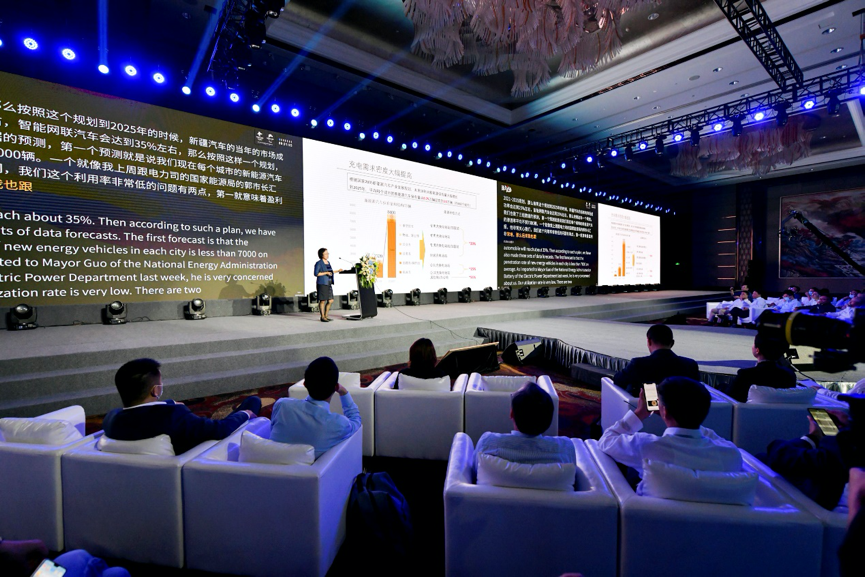
In early 2019, the MIIT and several other departments, in accordance with the State Council's overall deployment, launched the 2021-2035 plan for the new energy vehicle industry. Under this plan, by 2025 new energy vehicles may reach about 25% of the annual market, and intelligent connected vehicles about 35%. Based on this plan, we made three sets of forecasts. The first forecast concerns penetration: currently each city has an average of fewer than 7,000 new energy vehicles, and low utilization means huge potential, mainly because the density of charging demand is not yet sufficient — 7,000 vehicles per city. Counting 660 cities, by 2025 this will reach 35,000 vehicles, a fivefold increase. Take Beijing: it now has 400,000 new energy vehicles; if this increases fivefold by 2025 it will reach 2 million, meaning that one out of every three cars on the road will have a green plate. We can look forward to such a scenario.
In addition, we analyzed usage scenarios: roughly 20% of vehicles will use dedicated piles to meet their recharging needs; 20% to 25%, such as taxis, ride-hailing vehicles, and shared cars, will use public piles for recharging; and 55-60% recharge at residences and workplaces — that is roughly the breakdown.
My second car — we happened to install a pile at our own home — has now run 60,000 km with SOC above 90%. From my own experience, and that of my colleagues around me, under current technical conditions this is still well worth considering. But as I said, I am neither an advocate of rapid battery swapping nor a proponent of ultra-fast charging; in the end it comes down to technological progress, and even more to market choice. There is another point worth pondering, which I will study in depth in the 14th Five-Year Plan: we now have 120,000 gas stations nationwide serving 270 million vehicles. But we currently have 40,000 charging stations for 4.5 million vehicles. If we imagine a fleet of 40 million, or 80 million or even 100 million vehicles, how many resources would we occupy? This resource question is a topic I have not figured out myself — it deserves our research and analysis.
I would like to add that, according to the national 2035 plan, we have three sets of forecast data. The second set concerns charging electricity. Last year, according to our Alliance's statistics, it was roughly 8 billion kWh. What does that mean? A bit more than one thousandth of national electricity consumption, since the nationwide total is over 7 trillion kWh. By 2025 it will reach more than 90 billion or even 100 billion kWh, exceeding 1% of total social electricity consumption.
Looking at these figures, you may not feel much. But as Mr. Shao mentioned yesterday, including the mobile digital energy network, this concept may leverage or correlate a multiple-fold amplification. I cannot work out the account right now, but it is an account that needs to be worked out — these are very valuable numbers.
The third set of numbers involves our expectations for output value. I always tell the National Energy Administration: our industry is still too small. Although we are developing fast, compared with the automotive industry, our industry's total output value may be less than that of a mid-sized parts supplier — our scale is too small, and small scale means a weak position. In many industry patterns, I think the 14th Five-Year Plan period will see some change; although not a fundamental change, calculated on the same basis, last year's rough total was 100 billion yuan, and by 2025 it may reach the level of 250-300 billion yuan.
New topics arise because of new needs and new development opportunities — there may be deeper integration with the energy network, a smarter charging infrastructure network, and so on. I have four suggestions, two of which are addressed to the government:
First, incentive and subsidy policies. With media friends present, I hope you will voice your support together with us. We hope the intensity of incentives and subsidies will be increased — at minimum the central subsidy should be raised to 20%, with local matching at 1:2.
Second, expand the scope of incentives and subsidies. The current scope is very narrow, covering only pile construction. The costs of power capacity expansion and grid connection, which account for a large share, are not included in the incentives; therefore the scope should be expanded, because these are infrastructure in nature and should not be borne by the industry — the state should cover them 100% within the incentive framework.
Third, the process is too long and too delayed; we hope a pre-allocation system can be introduced.
Fourth, strengthen the management of incentive and subsidy policies, and of course there should also be some financial support.
Finally, I want to make one point: we cannot only make demands on the government; we ourselves must raise the level of development on the supply side. These are two 'highs'. One is high development quality, with three yardsticks: user satisfaction, industry satisfaction, and government satisfaction. Can we drive vehicle development? Can we next empower intelligent and connected vehicles? I believe these three yardsticks are the markers of whether we are achieving high-quality development, and all can be quantified. The other is a high level of intelligent connectivity, which mainly provides the guarantee to support high-quality development.
There are also several major tasks that I have already mentioned, and the materials can be shared with everyone. In conclusion, I believe that at the starting point of the 14th Five-Year Plan period, this industry will certainly seize the development opportunities and will certainly grow from small to large. Thank you all.