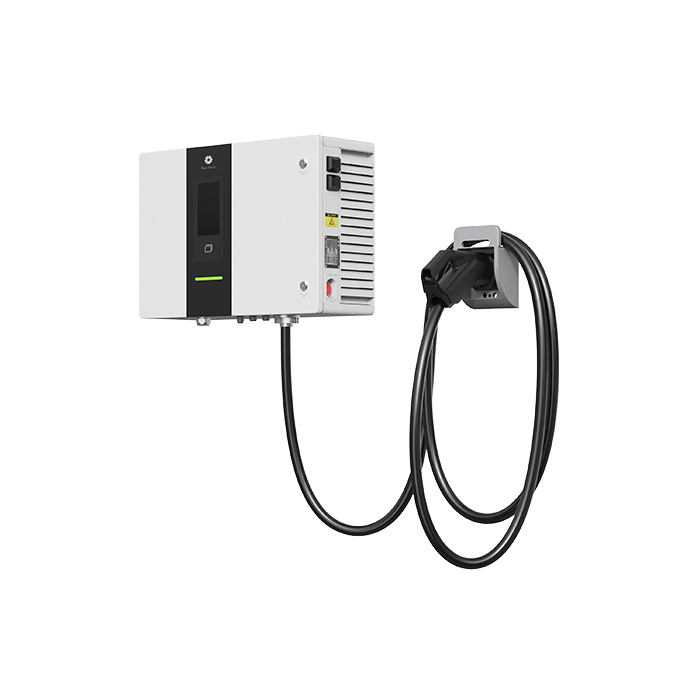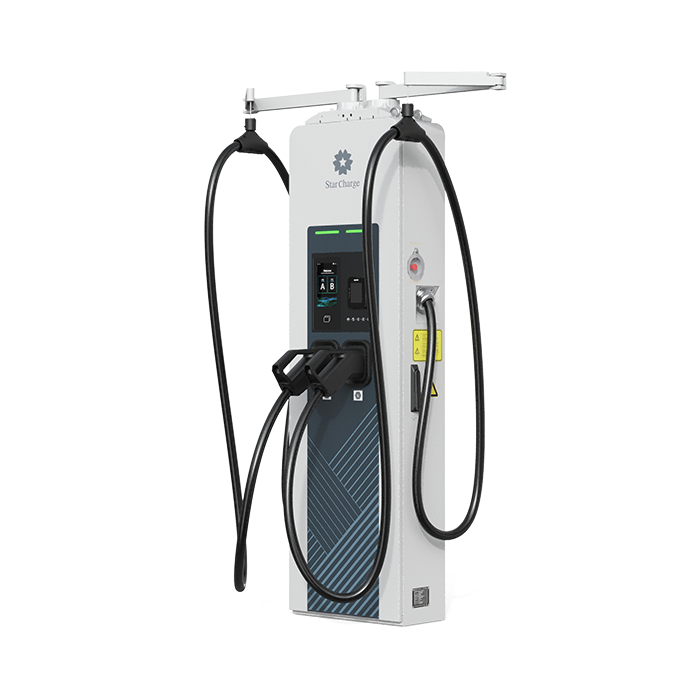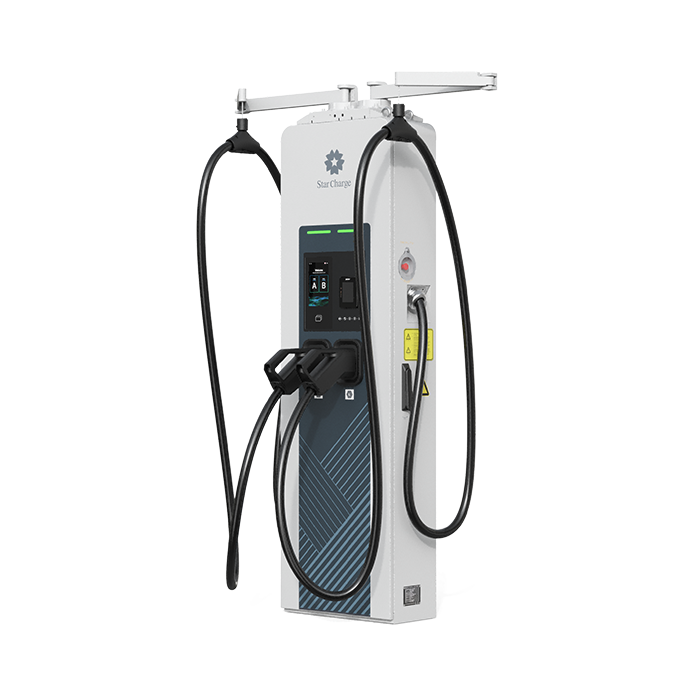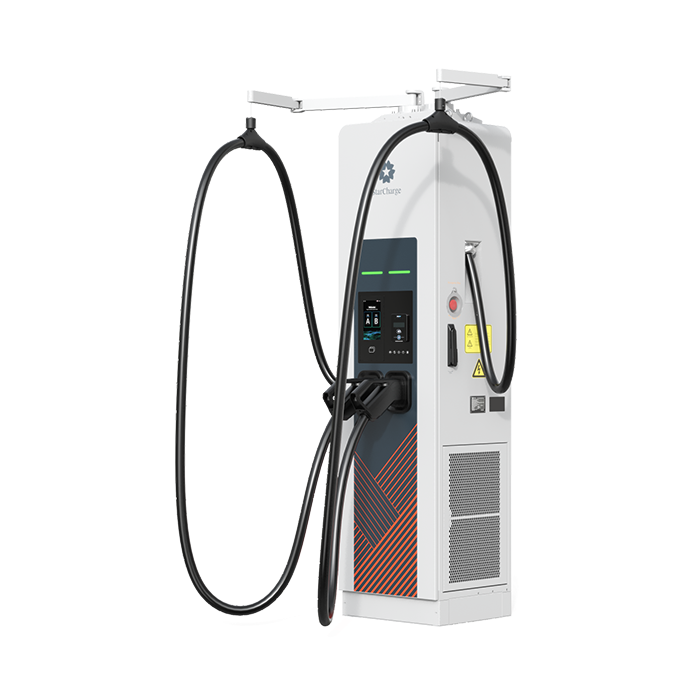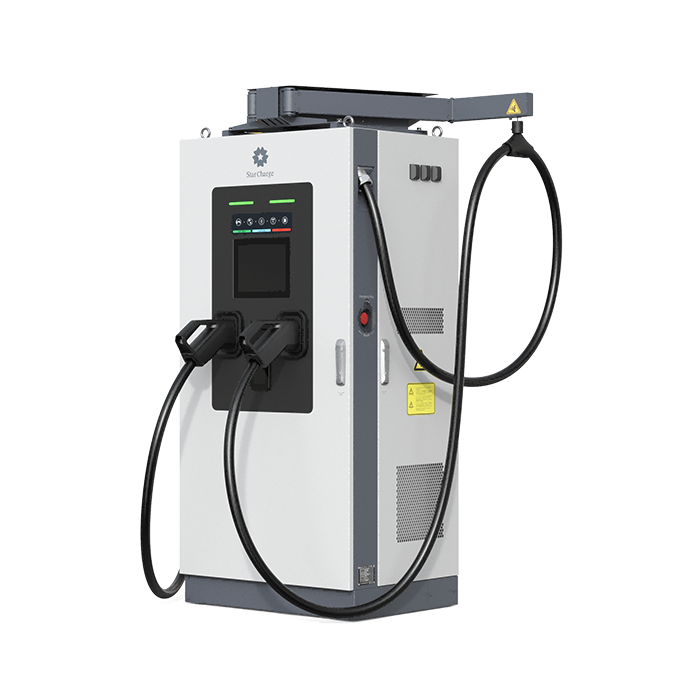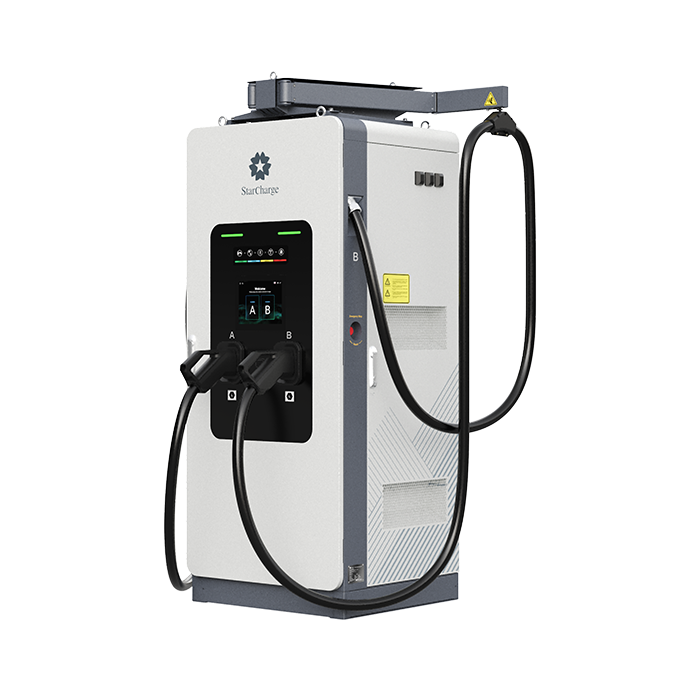
Across the three thousand great worlds, wisdom is expounded at Mount Sumeru. On September 23, 2020, the 3rd Sumeru Summit was held in Changzhou, Jiangsu. Hosted by StarCharge (Wanbang Digital Energy Co., Ltd.), the conference centered on the theme of the 'Mobile Energy Internet,' with more than 800 guests spanning government, industry, academia, research, media, and finance.

Zhang Yuming, President of StarCharge's R&D Center, delivered a speech titled 'Development Trends of Low-Power DC Charging Systems for Electric Vehicles.' The full transcript is as follows:
Today I will give an introduction to low-power DC. When I came to the Sumeru Summit last year, I presented the high-power trends. Why am I covering low-power DC this year? Because low-power DC is not merely a charger — it is a very important energy router that will enter our homes in the future. That is what I will introduce, because to realize the Mobile Energy Internet in the future, the most important element is the energy router, and this is the future form that low-power DC will take.
First, let's take a look at the trend I am going to present today. We will briefly introduce existing chargers, as well as the objectives and background that low-power DC needs to achieve. A very important point about low-power DC is that in the future we hope to achieve bidirectional energy flow. If low-power DC is elevated to the role of an energy router, it will bring major intelligent and green-energy capabilities to the home of the future.
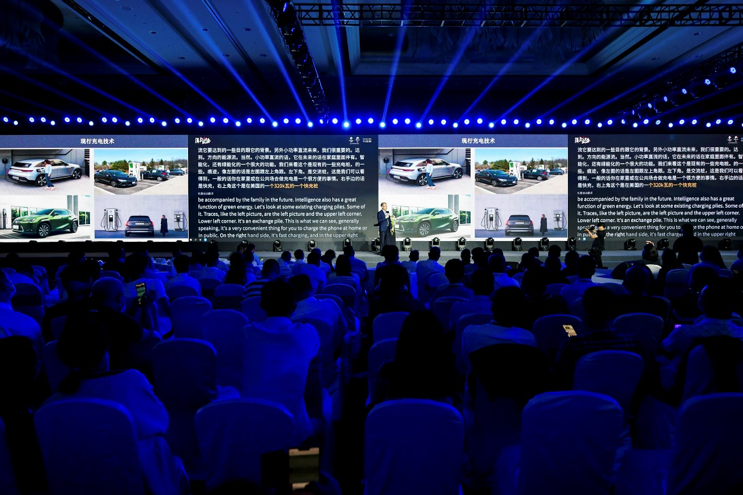
This is the current charging pile environment. On the AC side, charging at home or in ordinary public places is very convenient. Looking at 320 kW fast-charging piles in the United States, we can see that fast charging above 300 kW will become the norm in the future — a quick, convenient way to travel. We also know that such facilities should be deployed along arterial roads or highways. Everything discussed in this part concerns charging; in fact, it has little to do with discharging.
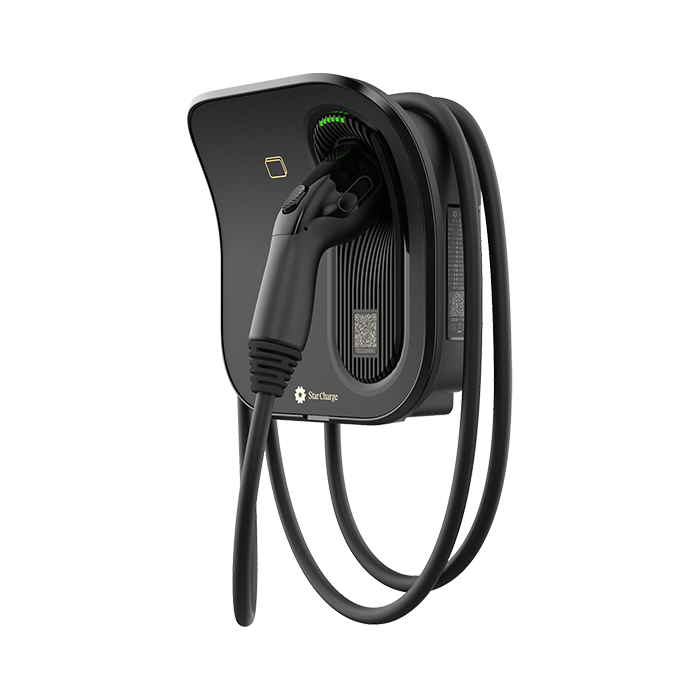
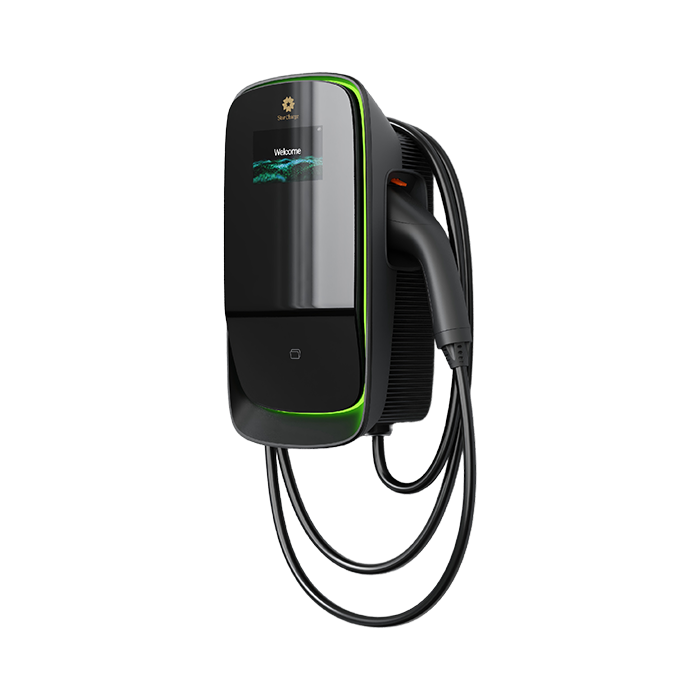
Let's analyze the current overall assembly structure of AC piles. An AC charging box may be portable or wall-mounted, followed by high- or low-voltage connection cables, an AC charging interface, then some PD relays, and of course a DC circuit breaker; it also requires an on-board charger with a water-cooling device. We see that so many components have to be placed on the vehicle. If we could remove them and use an external low-power DC unit instead, we would gain many advantages.
We can see there are many such advantages. The first is, of course, reduced R&D costs. We know that when an OEM develops a vehicle, if the on-board charger is included, the entire vehicle must be tested. Whole-vehicle testing is extremely time-consuming and very costly in terms of R&D.
The second is lower costs. Why can costs be reduced? Because so many components have to be assembled on production lines, and all these tests are production costs. Vehicle weight reduction: the on-board charger weighs at least three or four kilograms. In addition, the overall spatial design becomes more flexible, because without the on-board charger the vehicle is naturally more flexible. As for reducing overall vehicle cost, we considered a comparison with external wall-mounted charging piles and low-power DC, and our future low-power DC can do better.
With an on-board OBC installed in the vehicle, modification is hardly possible; you can only replace components. With wall-mounted low-power DC, future upgrades are possible, and upgrades have nothing to do with the vehicle. Reducing social costs: in fact, many car owners rarely use the OBC. Why? Because many of them charge elsewhere, in which case it is unnecessary. It is as if you bought a car with an on-board OBC that you may never use in your lifetime. Removing the OBC and using low-power DC can reduce social costs. Reducing after-sales maintenance costs is also important: if the on-board charger breaks down, it must be repaired at a 4S dealership. With an external low-power DC unit, this becomes unnecessary.
We can see that the development of low-power DC technology relies on a very important device — wide-bandgap technology, which mainly uses silicon carbide or gallium nitride. At present, silicon carbide is already widely applied in high-power fast charging, because in high-power fast charging it can improve efficiency and shrink the overall size. Low-power DC has now entered the adoption stage; gallium nitride will come a little later. Why? Because its reliability still needs further verification, but I believe gallium nitride will be a very important trend for the future of low-power DC.
Using these devices presents a significant challenge. Wide-bandgap devices have a great advantage: they behave like ideal switches. High switching frequency, low switching losses, and small size are all their advantages. What are the challenges? High frequency brings electromagnetic interference issues, high frequency causes component parameter issues, and how do you handle heat dissipation? All of these will be encountered.
For the wide-bandgap devices used here, we may use PCB transformers for the transformers, which makes the design simpler, the parameters easier to control, and the size smaller. Wide-bandgap devices may require special packaging, because only special packaging can reduce copper losses, since wide-bandgap devices can already reduce switching losses. Further reducing copper losses is therefore a very important point. Copper-loss reduction generally cannot be achieved with traditional packaging and requires special packaging methods, so modularized, miniaturized packaging is a very important future trend. We can see that all of these are the specialized technical challenges of using wide-bandgap devices in low-power DC, and also very important trends for the future.
Let's take a look at the common technologies here, which Professor Li already mentioned just now. In fact, this technology shares some similarities with Professor Li's, because we collaborate with them. First, the PFC on the left half uses an interleaving architecture, while the DC side uses a CLLC architecture; most of the whole architecture may be built with silicon carbide or gallium nitride. Its advantage is that these two architectures have an inherent merit — zero-voltage switching — which means very low switching losses and higher overall efficiency. In addition, the transformers and inductors here can adopt an integrated PCB design to make the overall size smaller, and of course this architecture also supports bidirectional energy flow.
To reduce copper losses, we will adopt special packaging throughout. In addition, as Professor Li mentioned just now, some consolidation has been done on the left side of this architecture; after integration, EMI can be reduced considerably and the overall size reduced even further. Beyond the zero-voltage switching advantage, its switching losses are very low, and with the PCB-integrated inductors becoming smaller, miniaturization becomes easier to achieve. The most important purpose of miniaturization is lightweight design, so that women can easily carry and move the unit.
This is the CLLC resonant DC/DC Professor Li mentioned. Here the transformer and inductor are integrated — the inductor is integrated into the transformer — which achieves the advantages of inductor integration, making the DC/DC smaller and more efficient. This way, not only can the size be reduced and efficiency increased, but it also becomes cheaper; this is the technological development trend for future small charging piles. As for functional versatility, mentioned earlier, there were many video reports yesterday. In fact, low-power DC will have several important functions in the future: V2G, V2H, V2L, and V2V. Among these four, the bigger future challenge is to integrate V2G, V2H, and V2L into one product. What advantages would such a product have? You can mount this charger on a wall, and it can interact with the grid to save on electricity costs. When the grid suffers an outage, it can automatically switch to V2H; take the unit out with you and it can provide V2L functionality. V2V design is rather different — it is aimed at emergency rescue between vehicles; in the future it will interface with cloud platforms, so that when charging is needed, you can charge from the nearest vehicle on the platform. This can be portable or wall-mounted, and the trend going forward is a design that is both portable and wall-mountable.
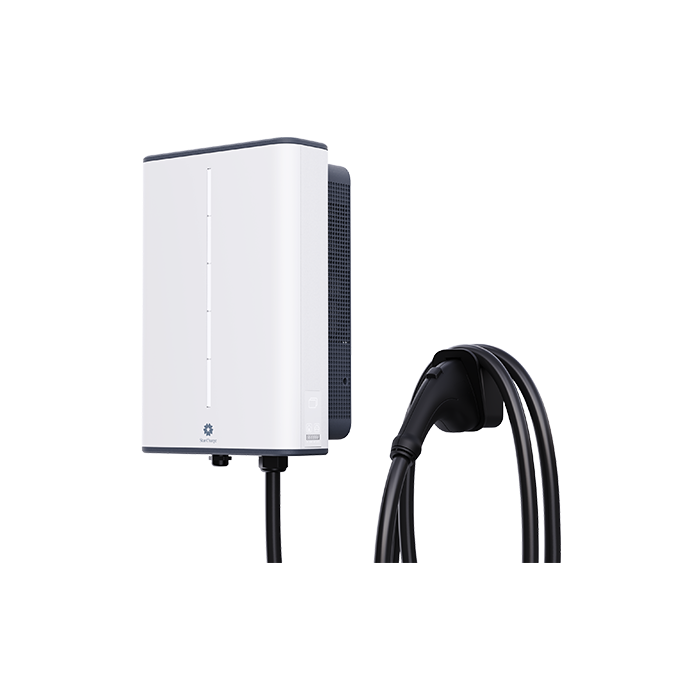
Let me briefly introduce the 2.2 kW bidirectional DC charger. Why 2.2 kW? This takes into account 220-230 V sockets around the world, which usually carry safety requirements, so 2.2 kW is roughly the most appropriate portable power level that can be charged from a household socket. We have currently achieved 4.2 kg in weight, an IP67 protection rating, and an operating temperature range of -30 to 50°. Another advantage is that it provides bidirectional energy flow with V2L functionality. Carried on the vehicle, you take it with you when going out and keep it at home when not; it also supports remote O&M.
This is the existing 6.6 kW unit, which was also demonstrated with V2G yesterday. This V2G unit weighs about 15 kg. Low-power DC faces a major challenge — noise. Noise will also be a big challenge in the future, because we need to keep it very low. There is also IP65: since the environment is more challenging, IP65 makes the whole unit last longer and makes it less susceptible to environmental interference.
This is what I mentioned just now: we want to bring the low-power DC charger into the future, where it becomes an energy router at home. This is V2X. What is an energy router? An energy router connects solar panels through a solar DC-DC converter and connects energy storage batteries through another port. Via the home energy controller, I can manage all household appliances, charging piles, and solar power, so we can use solar energy. In this way, the entire low-power DC unit becomes the core energy router of the home — also a key node for the future mobile internet.
We are promoting the cloud-pipe-terminal architecture. As you can see, through the V2X energy router and the HEMS controller for overall energy management, we achieve monitoring of charging, power generation, and electricity consumption data; dynamic load management for overload prevention; and settings for various scenarios. It can later become very smart — no manual operation needed; you can simply use voice commands to request energy-saving mode, cost-saving mode, comfort mode, or fast-charging mode, and so on. Of course, it can also perform PV power generation and household electricity forecasting and consumption functions. Surplus electricity can be sold to the grid company, so at the cloud level we will carry out grid demand-side response as well as green energy and blockchain trading. Let me especially mention: people often say that EV charging comes from fossil-fuel energy. With green energy trading or blockchain trading, we can actually verify that the electricity charged comes from solar or wind — this is something we will be able to achieve in the future.
Finally, let me summarize. The development trends of our future low-power DC and charging technologies: first, we will make extensive use of wide-bandgap technology to make compact, lightweight designs easier and to replace the OBC — the keys to replacing the OBC being smaller size and lower cost. Second is bidirectional energy flow, which will support the future smart grid, making grid operation more flexible and utilization higher. Then there is combining green energy with energy storage to move toward zero emissions — with sufficient solar power and energy storage, the zero-emission goal draws ever closer. Finally, we apply IoT technology to make smart charging safer, more worry-free, and more cost-effective. Thank you.